Fall 2025
Dishcovery
Cultural Cooking Substitutions & Flavor Confidence
A mobile app that helps users adapt recipes based on dietary needs, preferences, and constraints through guided flows and intuitive interaction design.
User Research
Usability Testing
Interaction Design
Duration
Aug 2025 – Dec 2025
Role
UX Research and UX Design (end-to-end, team)
Key skills
Quick Snapshot
Who
First and second-generation immigrants in their 20s who cook cultural meals away from home
What
A mobile app that helps people substitute missing ingredients while visualizing flavor impact
When
Aug 2025 – Dec 2025
Why
Missing ingredients and unclear substitution logic make “authentic” cooking stressful and discouraging, especially when food is tied to identity and belonging
Problem
Background
For many young immigrants, cooking is a way to stay connected to home. But key ethnic ingredients are often unavailable, expensive, or taste different, tools don’t match home methods, and guidance is scattered across blogs, videos, etc., leading to frustration and low confidence.
How might we?
How might we help first and second-generation immigrants build confidence and resilience when recreating cultural recipes by making ingredient substitutions that still preserve cultural identity and enjoyment?
Research Methodology
Interviews (Contextual)
- Conducted 10 contextual interviews with participants aged ~20–29 who cook most meals and prioritize cultural food.
- Sessions were in-person (kitchens/grocers), ~45–60 mins.
- Data collection included audio + video recordings, photos of ingredients/tools, and field notes.
Market Research
Reviewed a broad solution space like recipe/community platforms, ingredient databases, AI assistants, grocery delivery, and non-digital references like substitution books.
Data analysis
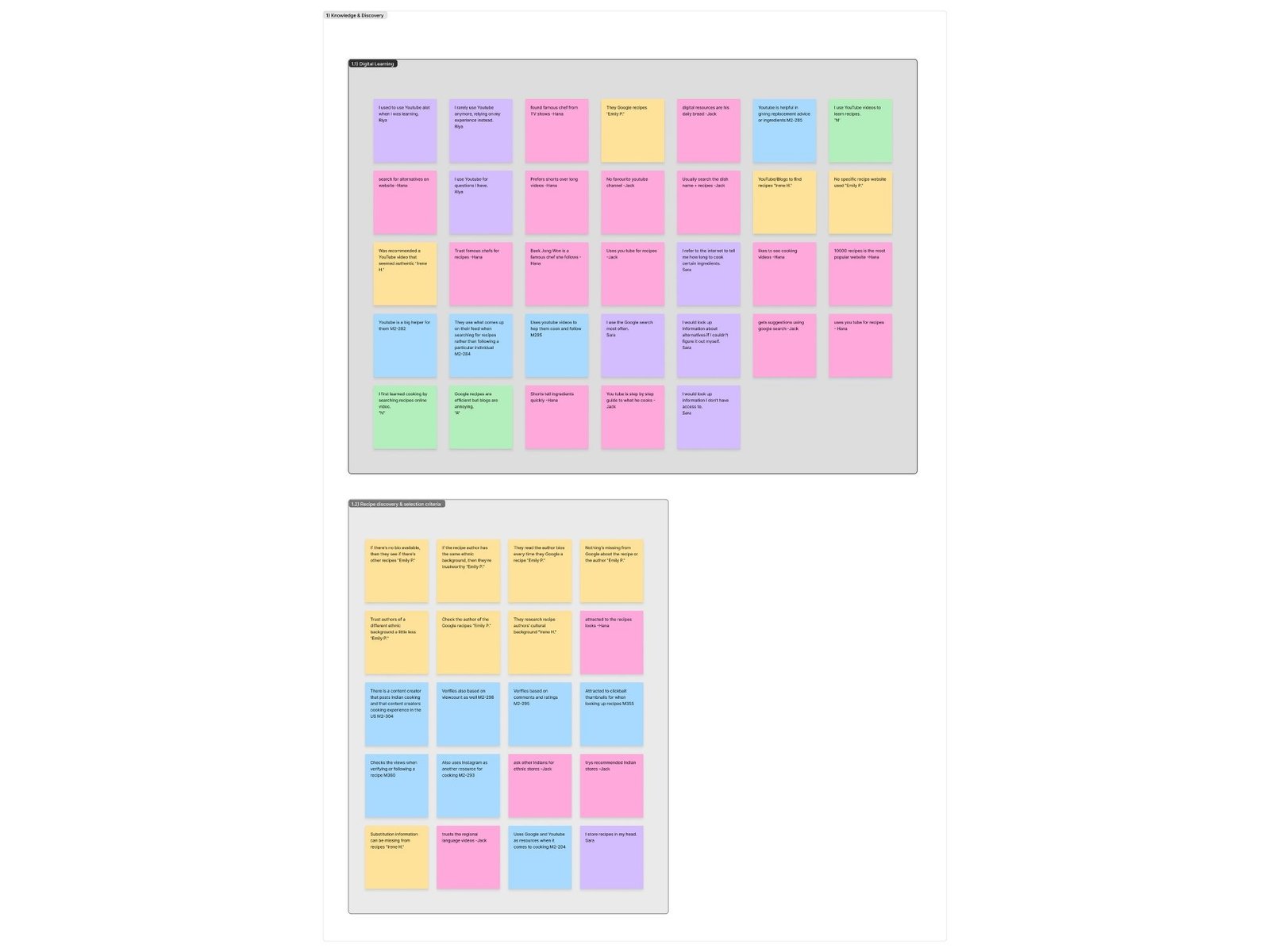
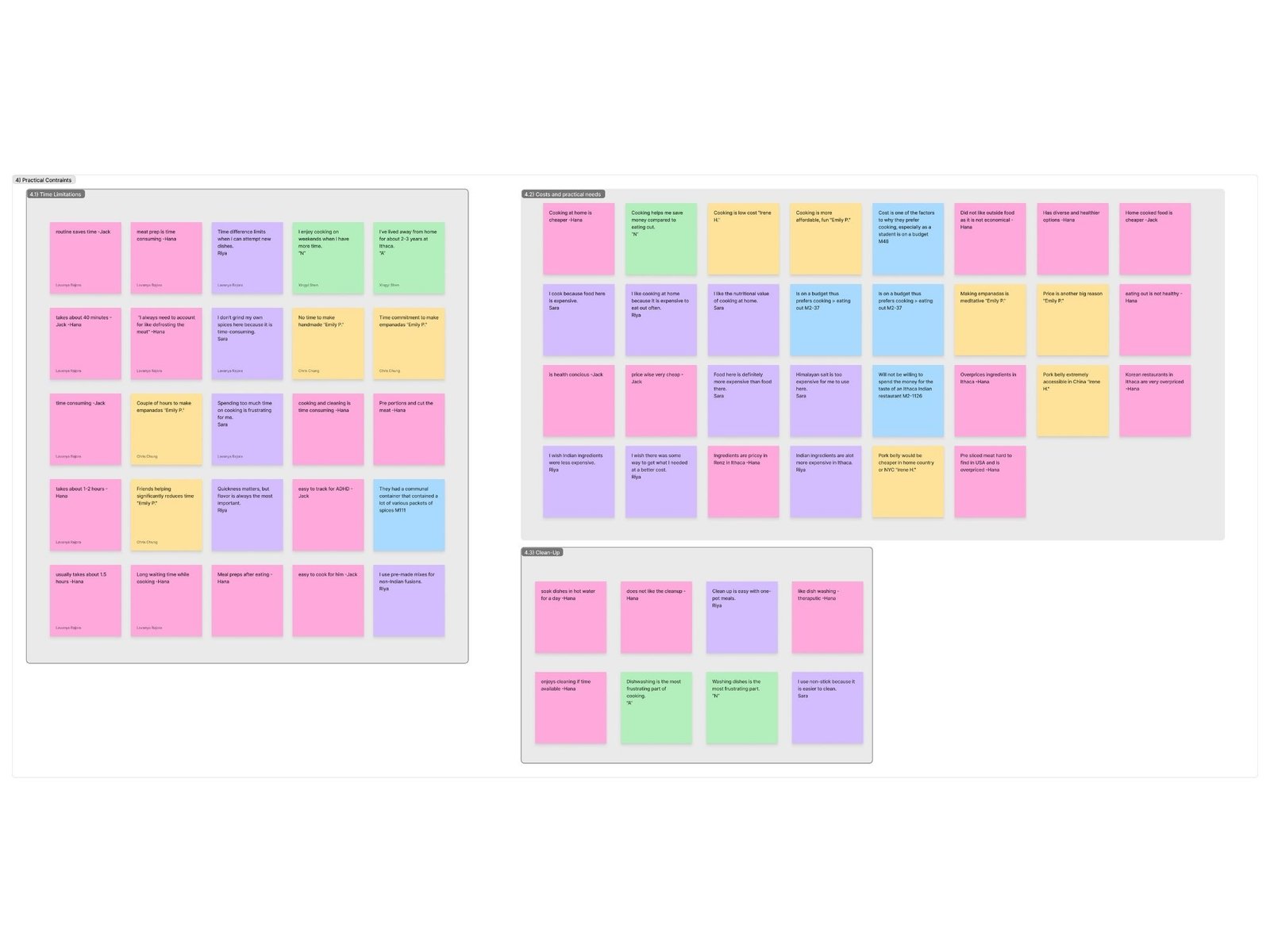
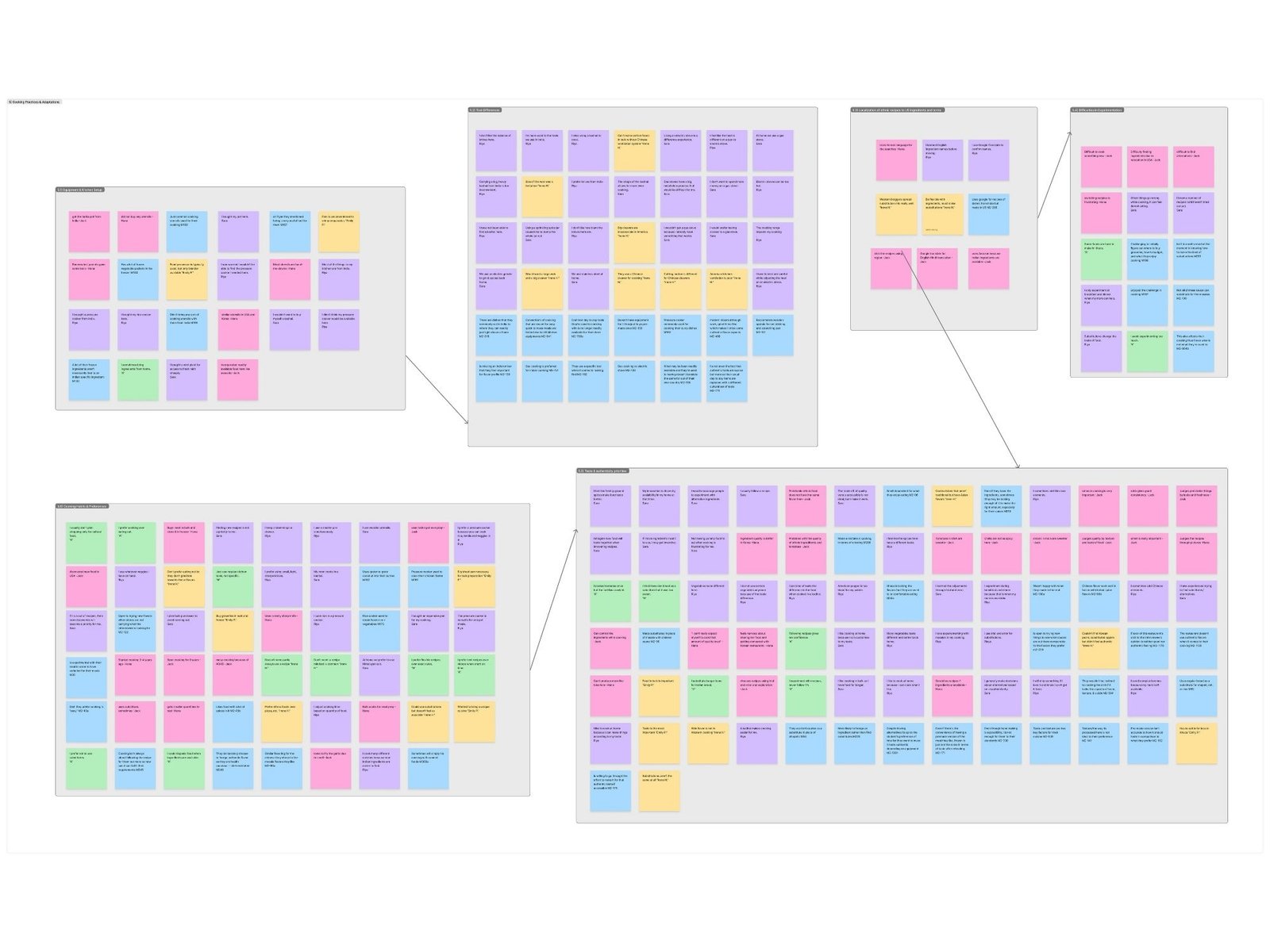
Transcribed/organized interview data and synthesized it into insights using affinity diagramming. Built a persona to anchor design decisions.
Affinity mapping for data analysis


Results
Market research insights and gaps
What existing tools do well:

Grocery delivery improves access.

Help people cook with what they have, but often stop at basic substitutions.

Community and guidance platforms can build confidence.
Key gaps:

Many tools lack cultural sensitivity.

They don’t explain how substitutions change authenticity.

They rarely support learning from past cooking attempts.
Interview insights
From the analysis, five core themes emerged:

Skill-building is trial-and-error supported by YouTube, family, and culturally “trustworthy” creators, yet substitutions stall when alternatives aren’t clear.

Access constraints: ingredients/tools are hard to find, expensive, or require travel; people bring items from home (country) or rely on visitors.

Practical and financial constraints uniquely affect cultural cooking (home ingredients are cheaper “back home,” costly abroad).

Ingredients taste different, making substitutions feel emotionally risky (food that’s “not yummy after cooking” is demotivating).

Cooking is both identity and belonging; there is pride in sharing food, but anxiety when authenticity is questioned.
Design direction
We chose to focus on reducing substitution anxiety by pairing:
- Intelligent substitution recommendations
- A flavor scoring/visualization system that shows how a swap changes the dish.
Market research insights and gaps
What existing tools do well:

Help people cook with what they have, but often stop at basic substitutions (not culturally grounded).

Community and guidance platforms can build confidence.

Grocery delivery improves access.
Key gaps:

Many tools lack cultural sensitivity.

They don’t explain how substitutions change authenticity.

They rarely support learning from past cooking attempts.
Interview insights
From the analysis, five core themes emerged:

Skill-building is trial-and-error supported by YouTube, family, and culturally “trustworthy” creators, yet substitutions stall when alternatives aren’t clear.

Access constraints: ingredients/tools are hard to find, expensive, or require travel; people bring items from home (country) or rely on visitors.

Practical and financial constraints uniquely affect cultural cooking (home ingredients are cheaper “back home,” costly abroad).

Ingredients taste different, making substitutions feel emotionally risky (food that’s “not yummy after cooking” is demotivating).

Cooking is both identity and belonging; there is pride in sharing food, but anxiety when authenticity is questioned.
Design direction
We chose to focus on reducing substitution anxiety by pairing:
- Intelligent substitution recommendations
- A flavor scoring/visualization system that shows how a swap changes the dish.
Design Process
Ideation
We generated and sketched 100 concepts, compared them, and voted on directions like bulk purchasing, gamification, and community-building—then ruled out ideas that didn’t justify complexity (e.g., “gamification for the sake of gamification”). We ultimately selected Dishcovery because it uniquely combined substitution intelligence with taste-impact clarity.
Design decisions & prototypes
Chosen concept
Dishcovery helps immigrant cooks recreate traditional recipes using local ingredients by offering:
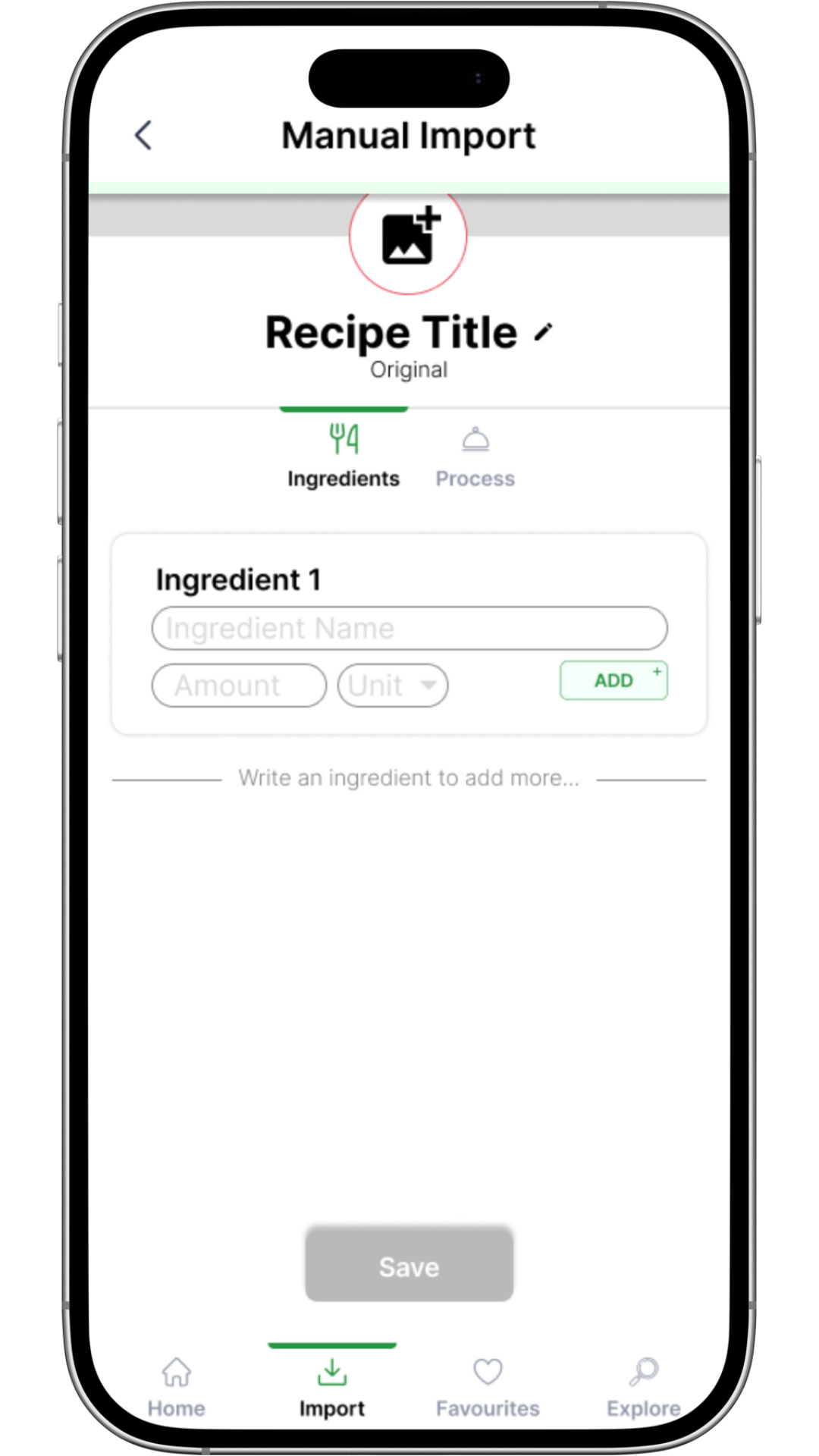
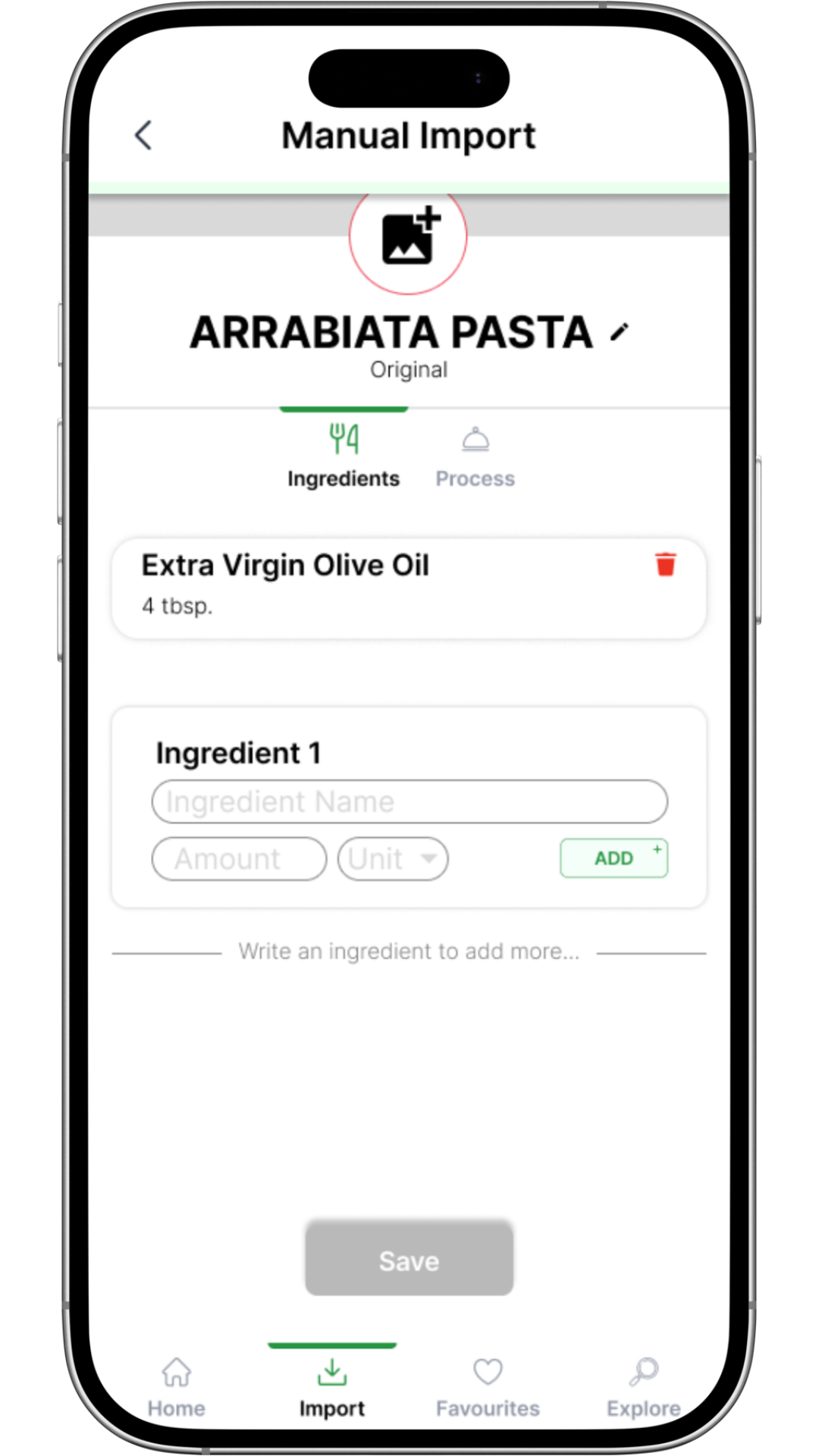
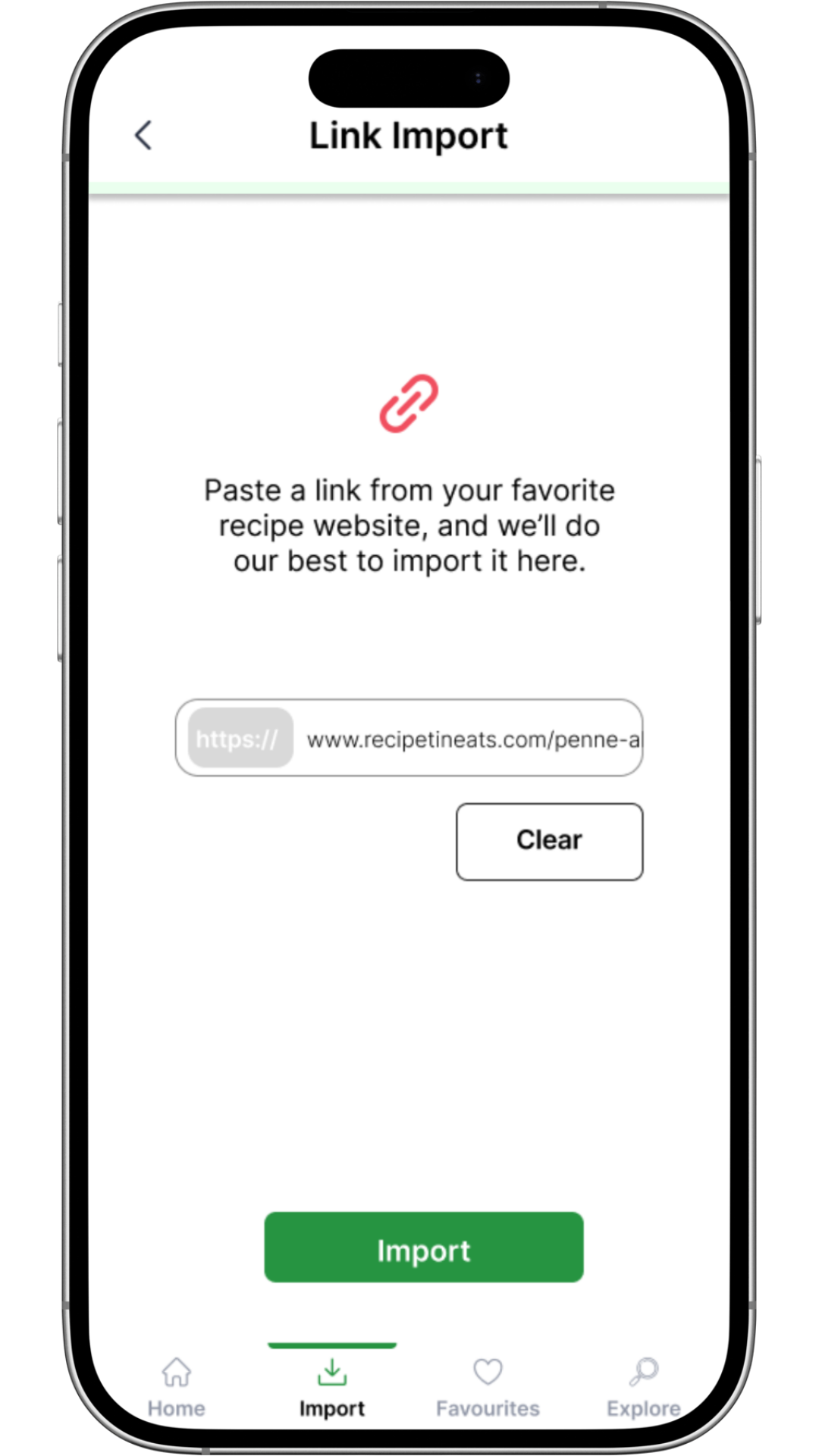
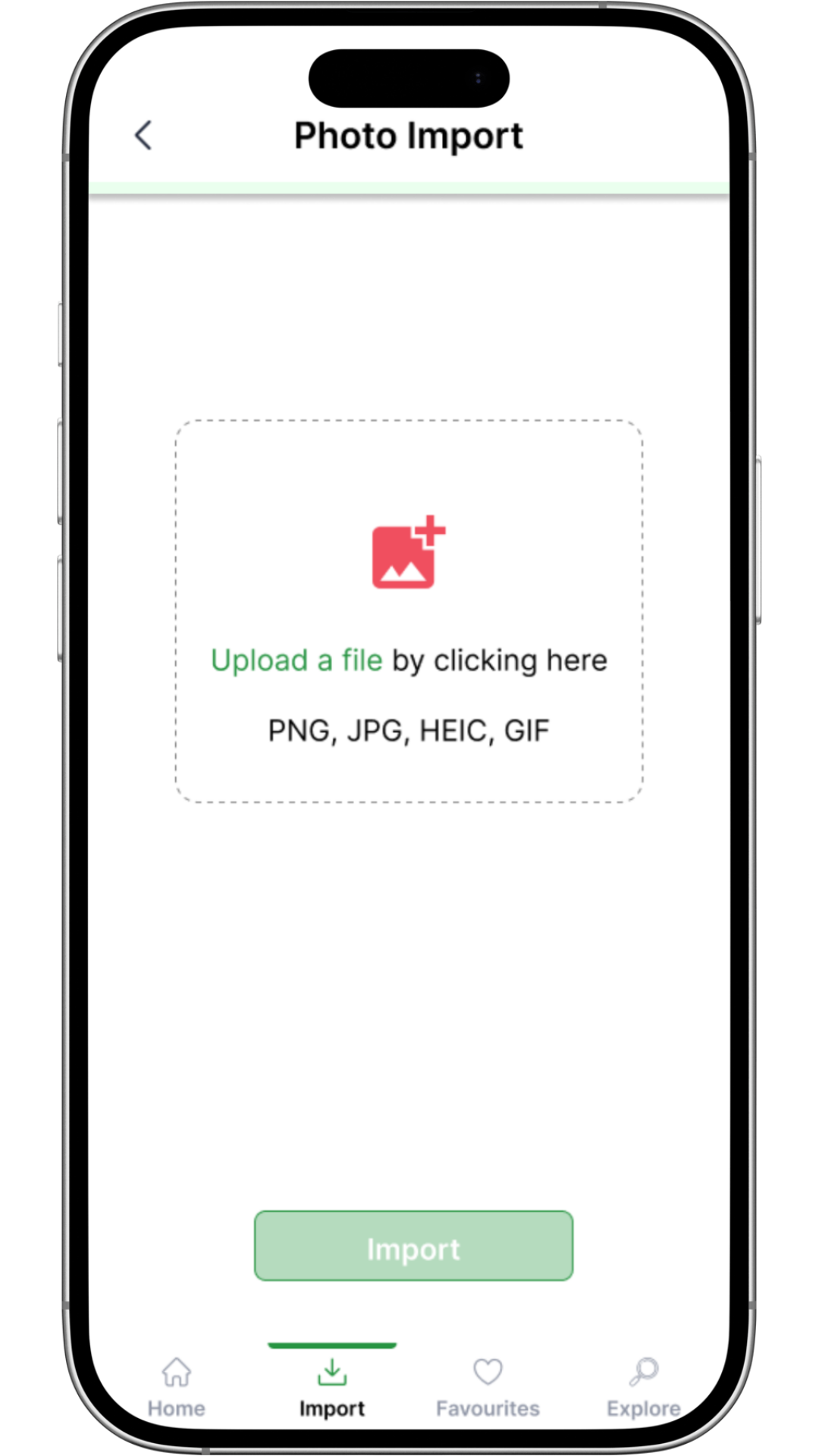
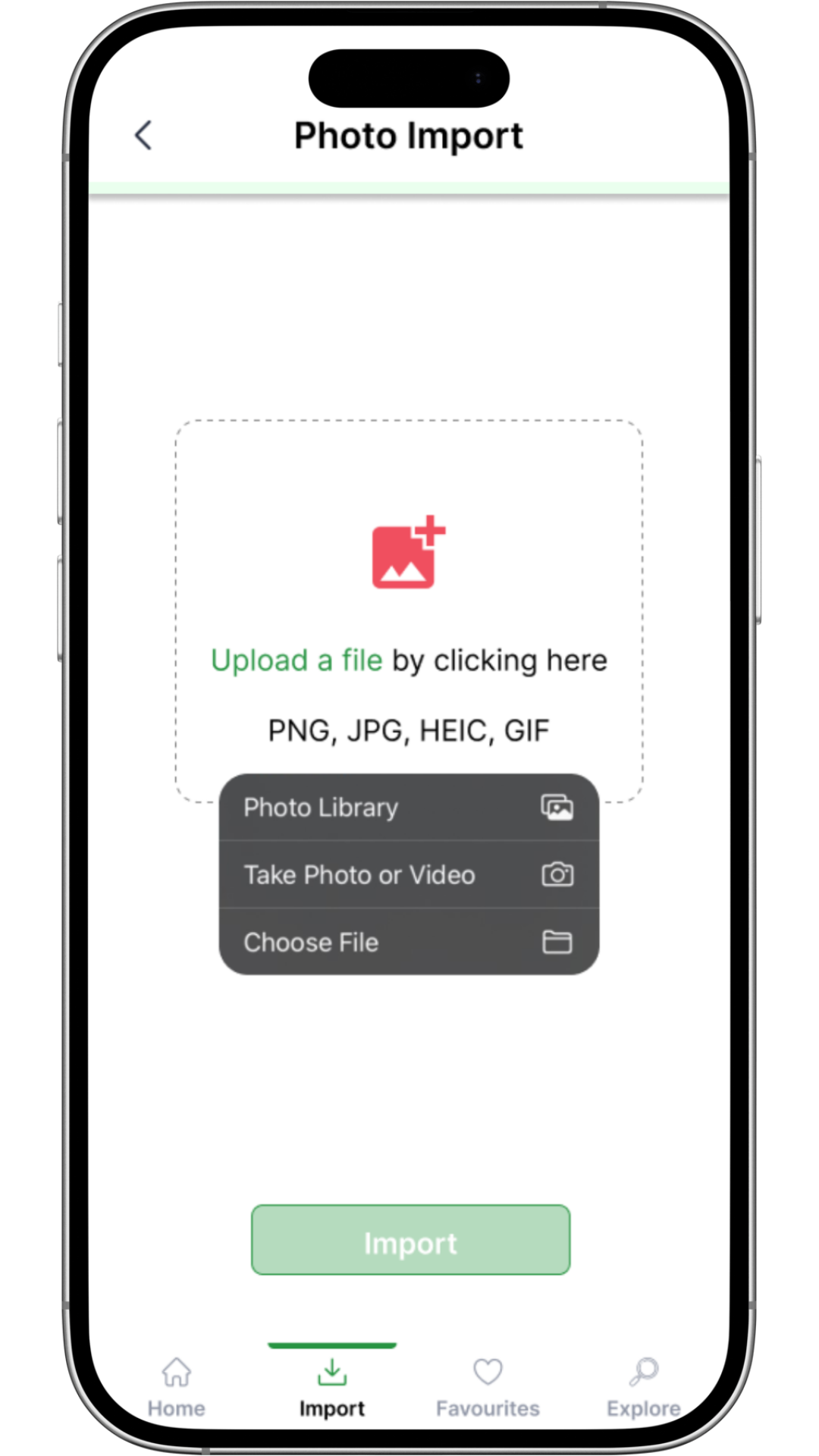
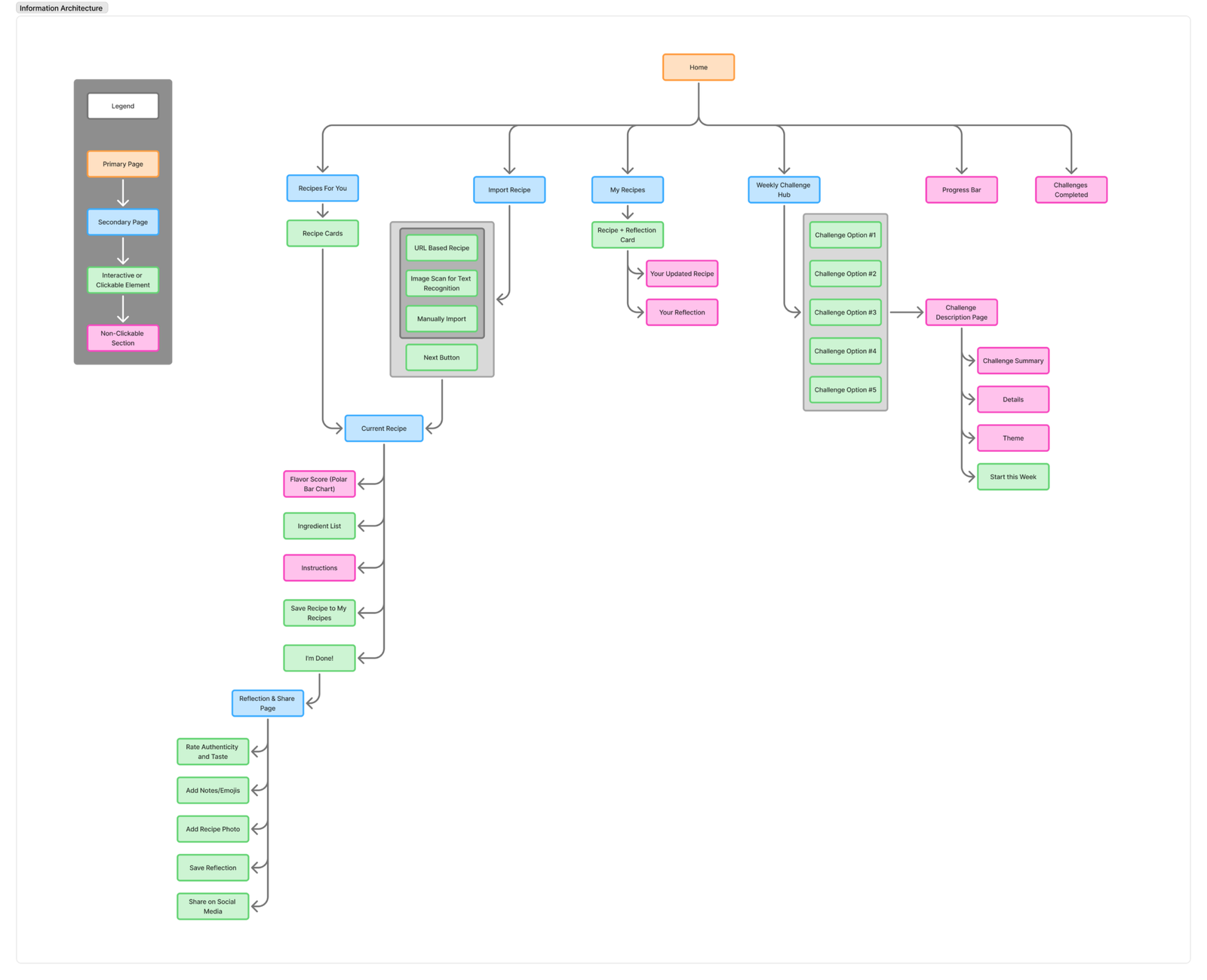
- Recipe import (URL/manual/photo)
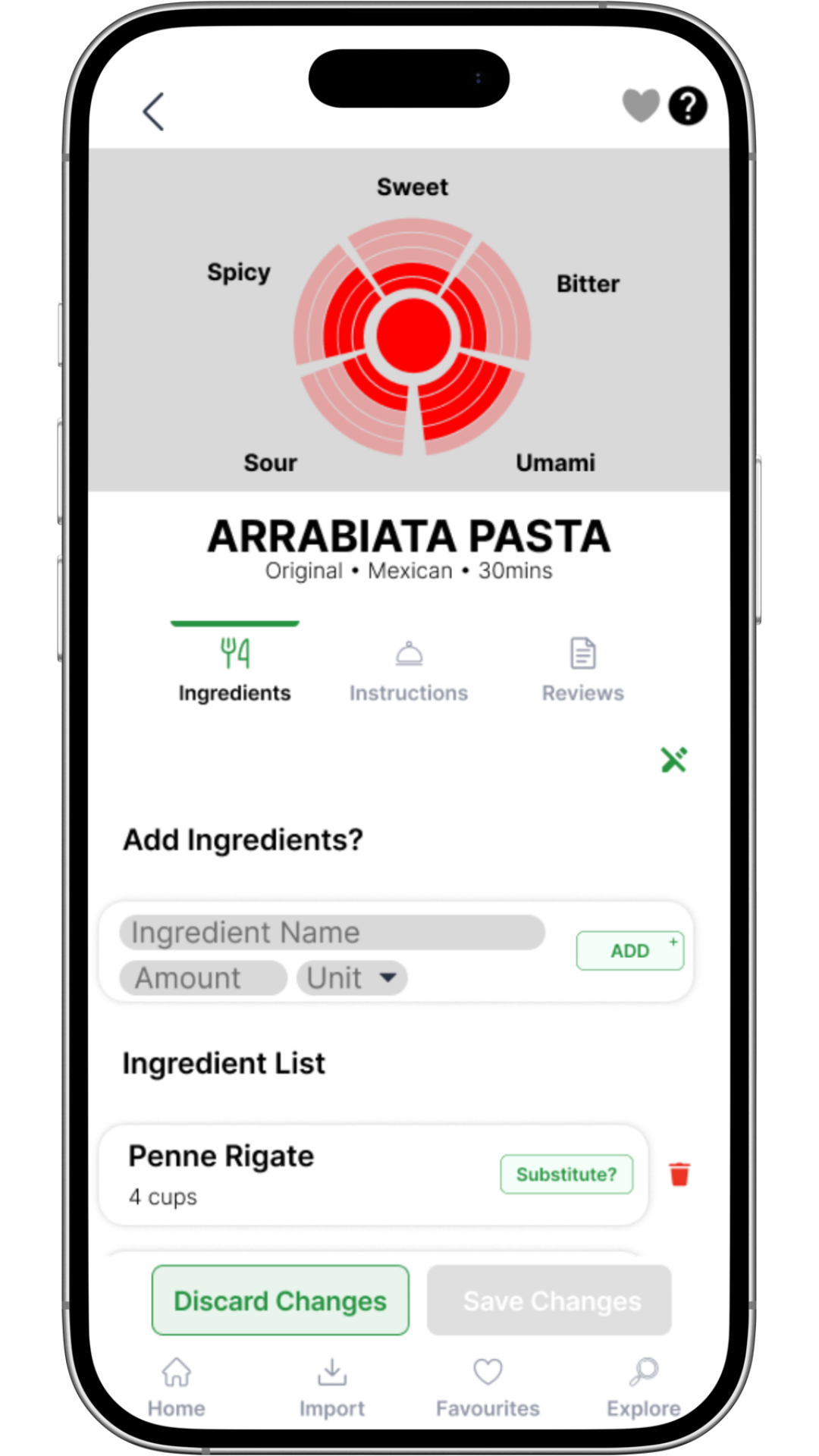
- Ingredient checklist
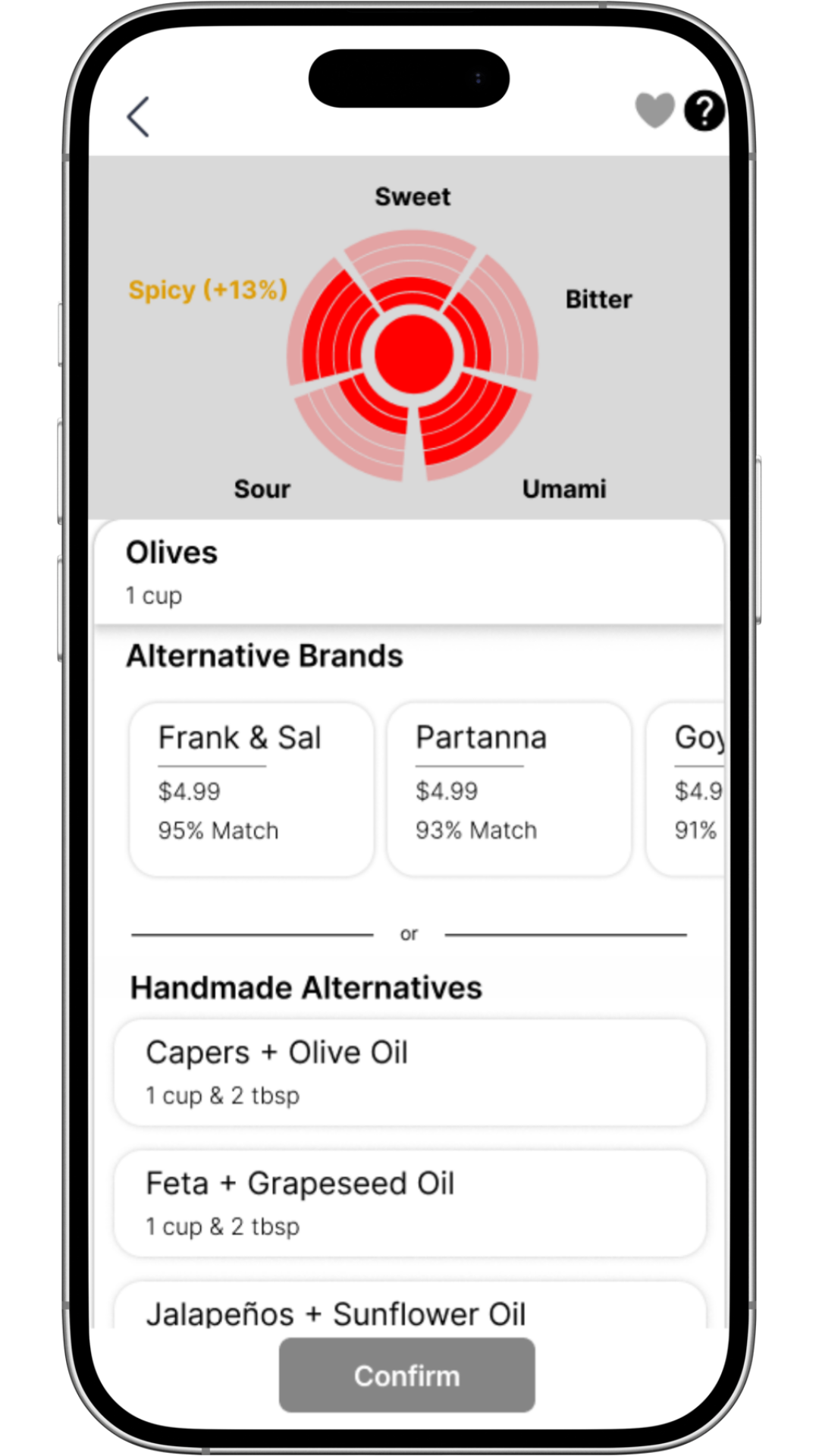
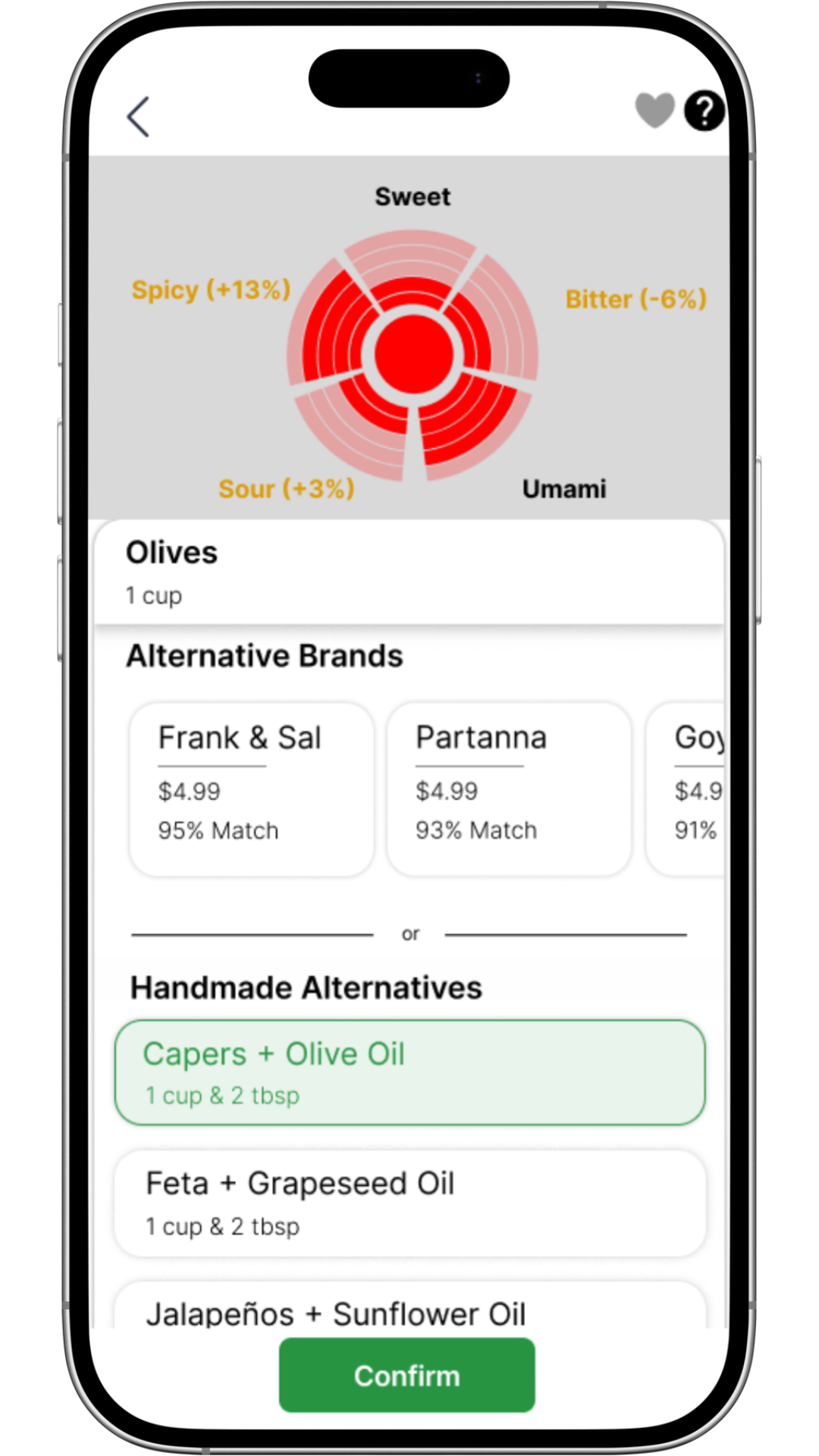
- Substitution options (brand alternatives as well as homemade combinations)
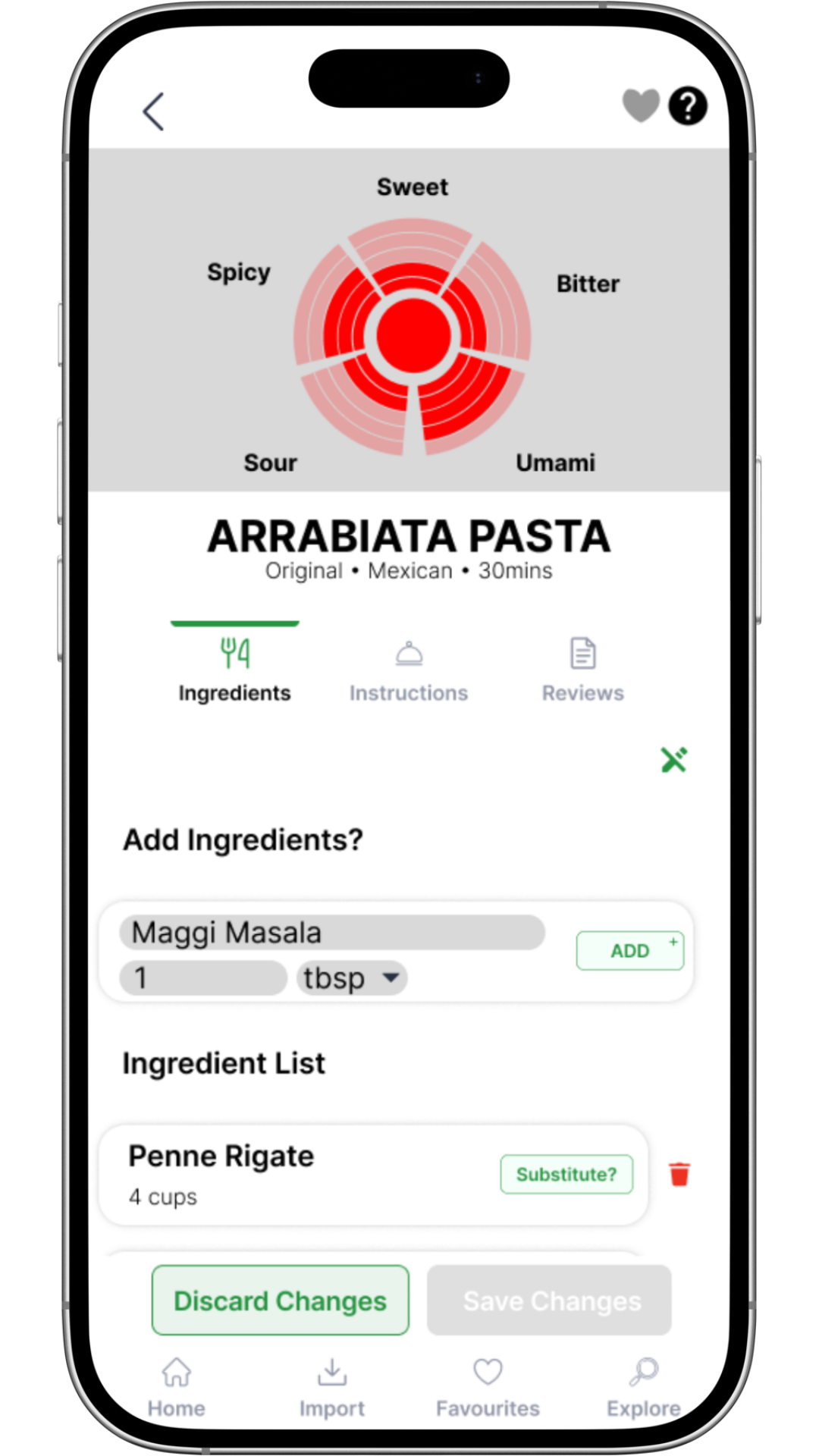
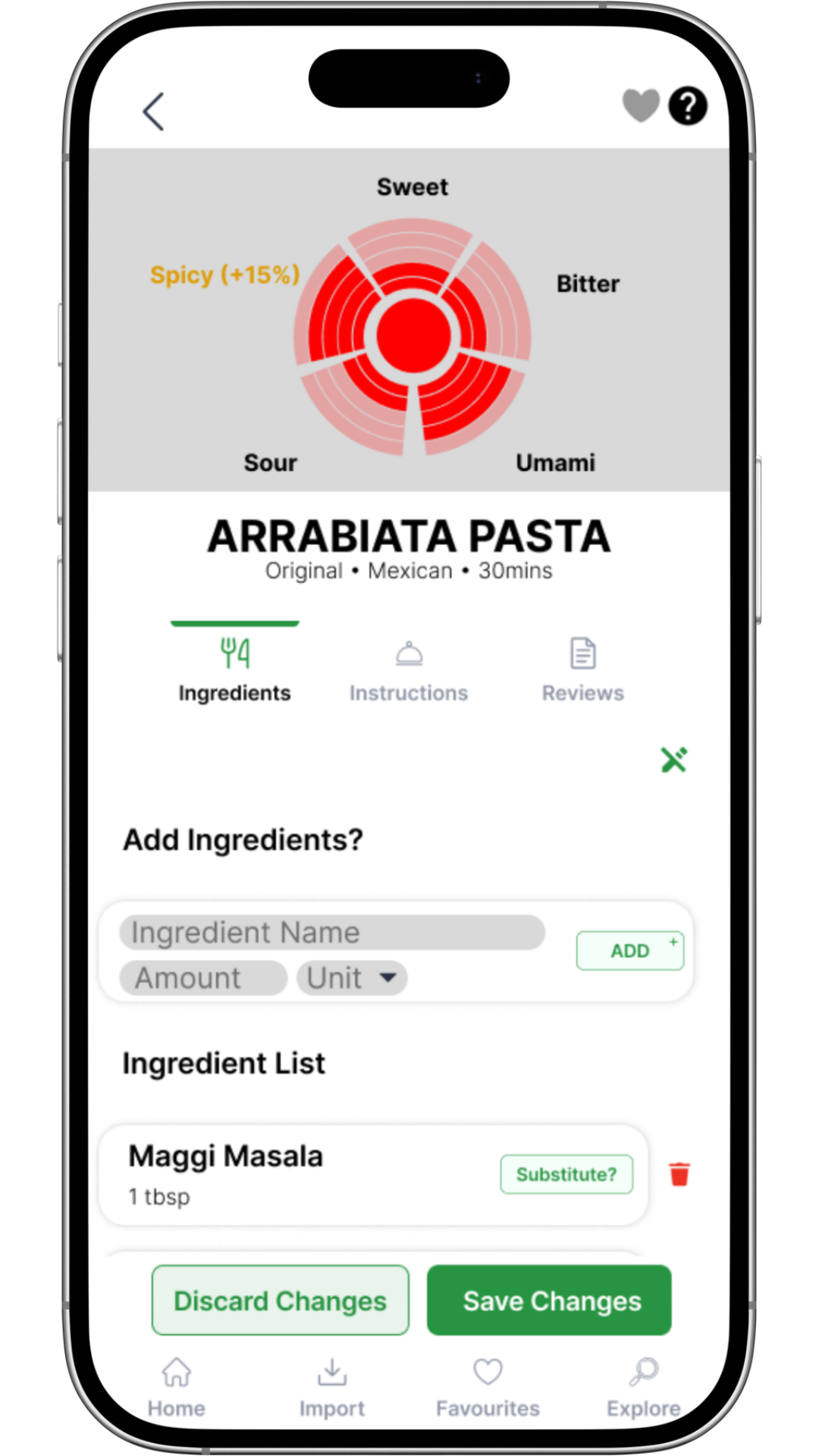
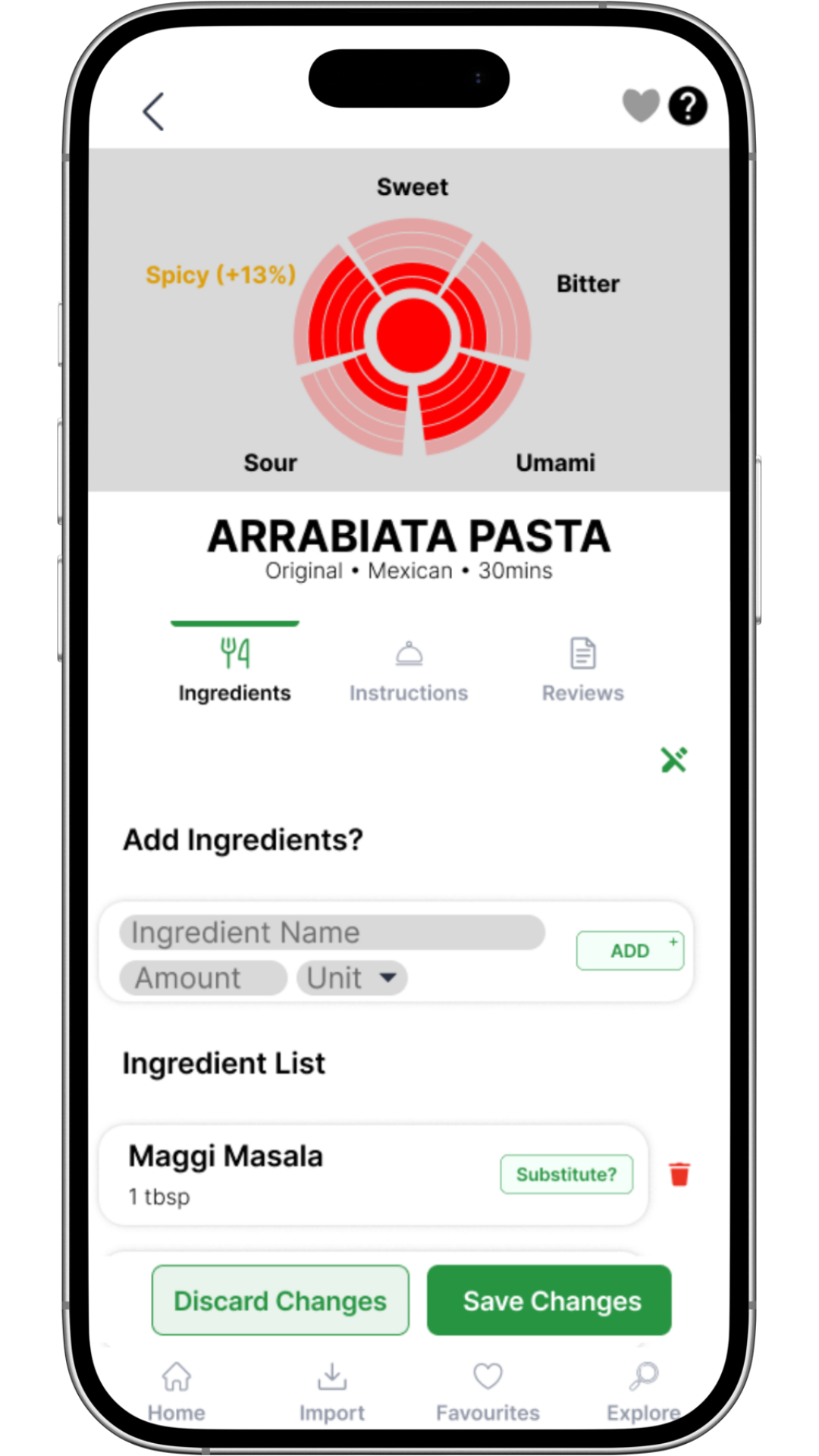
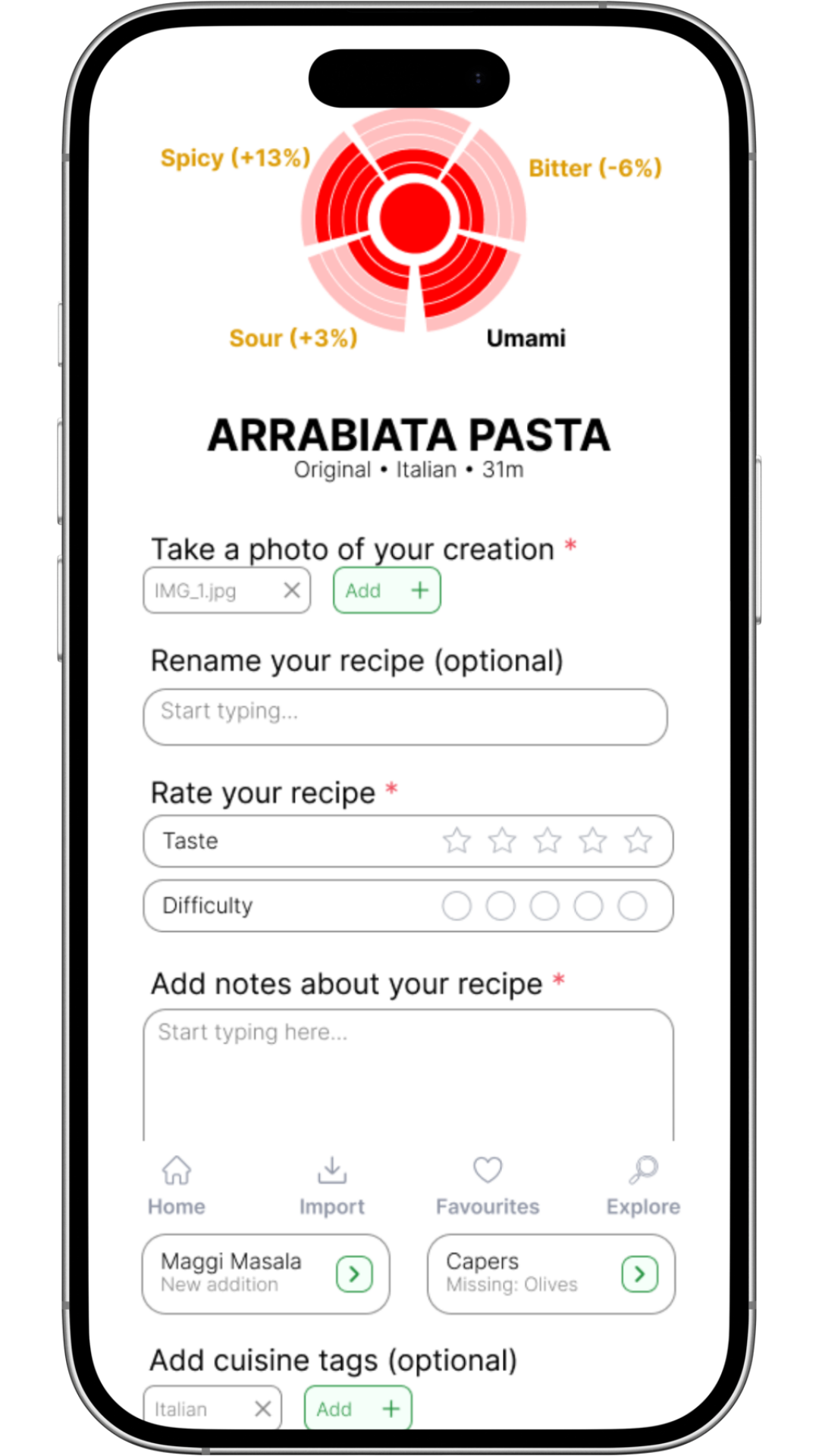
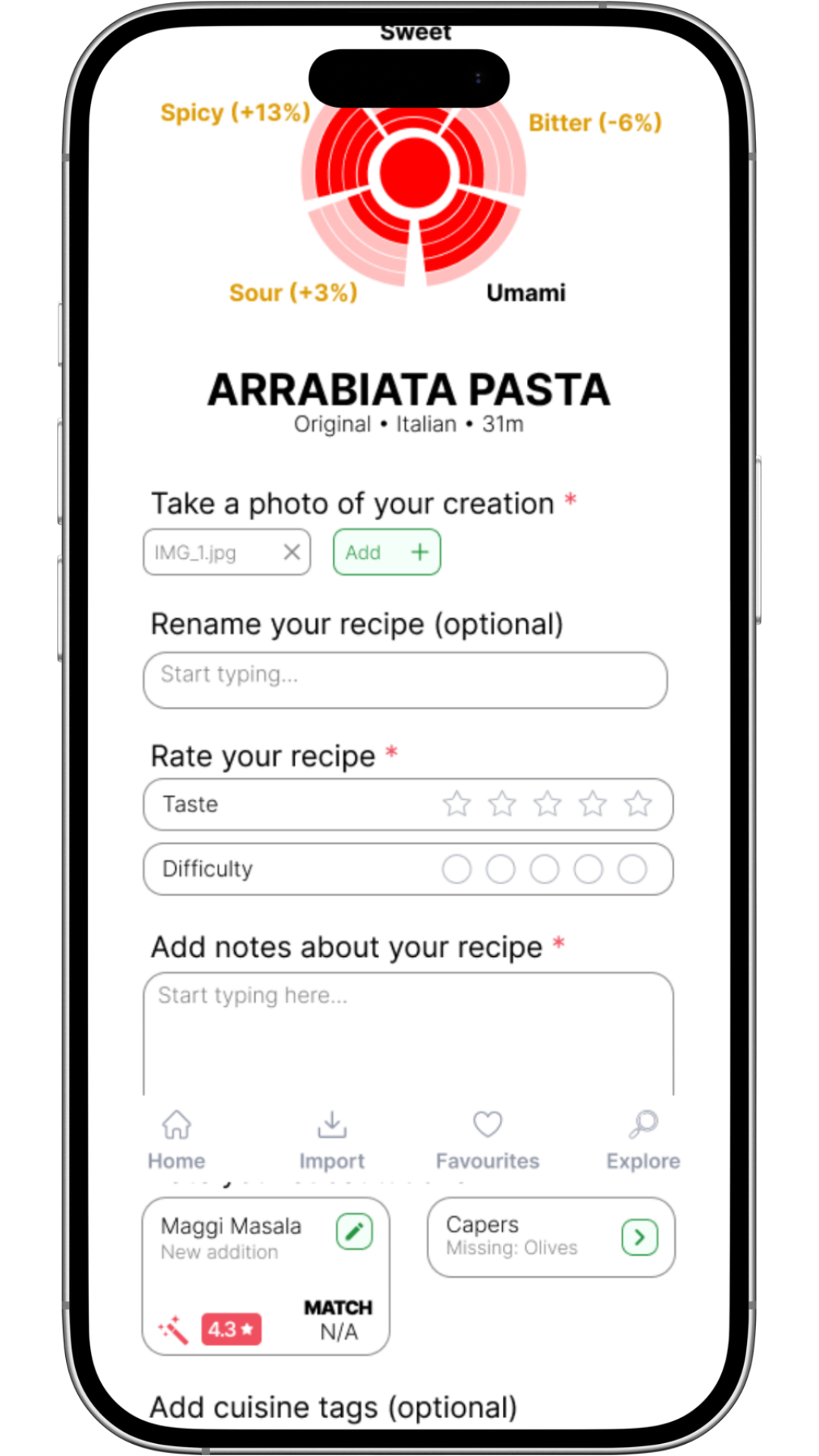
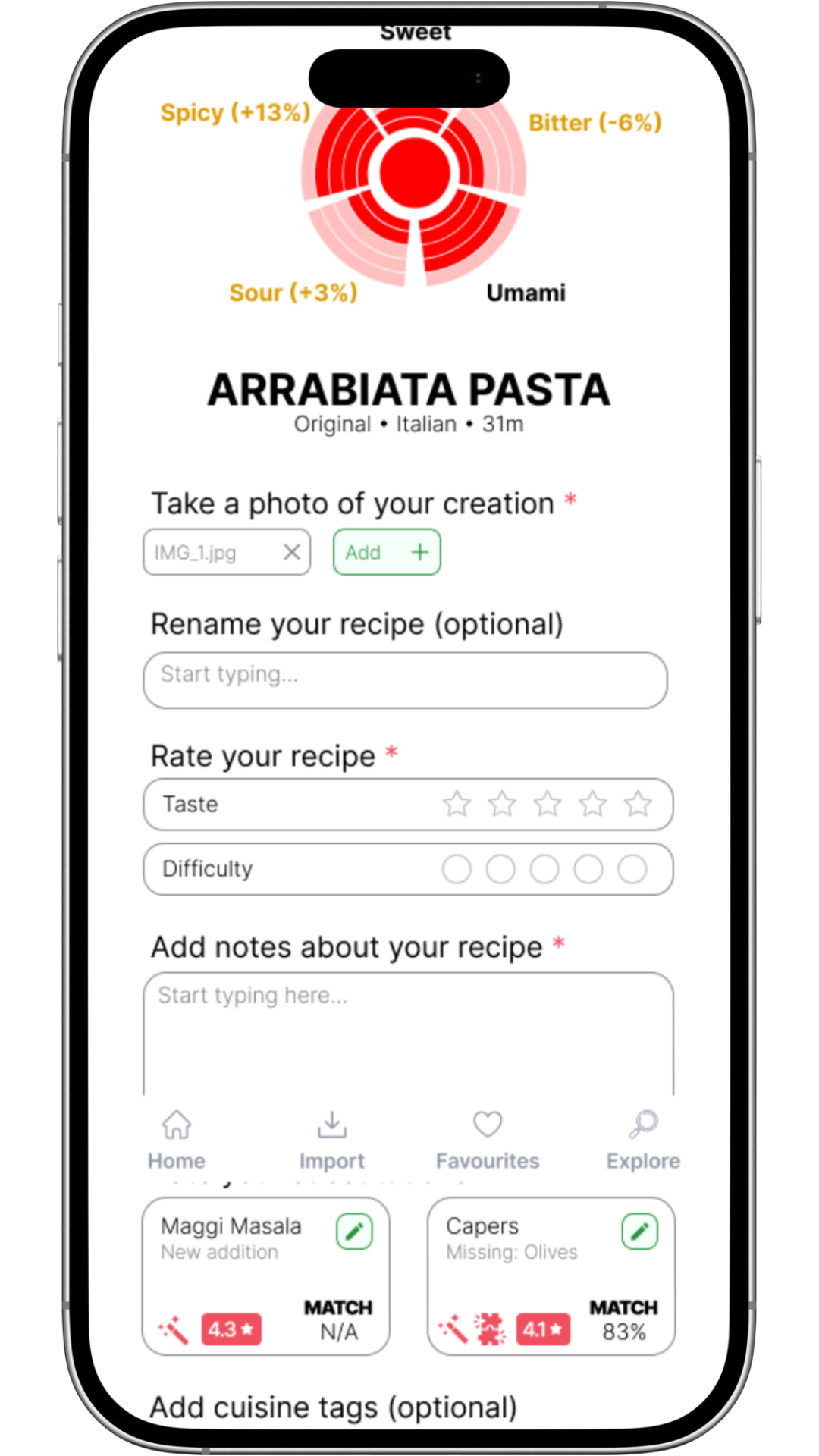
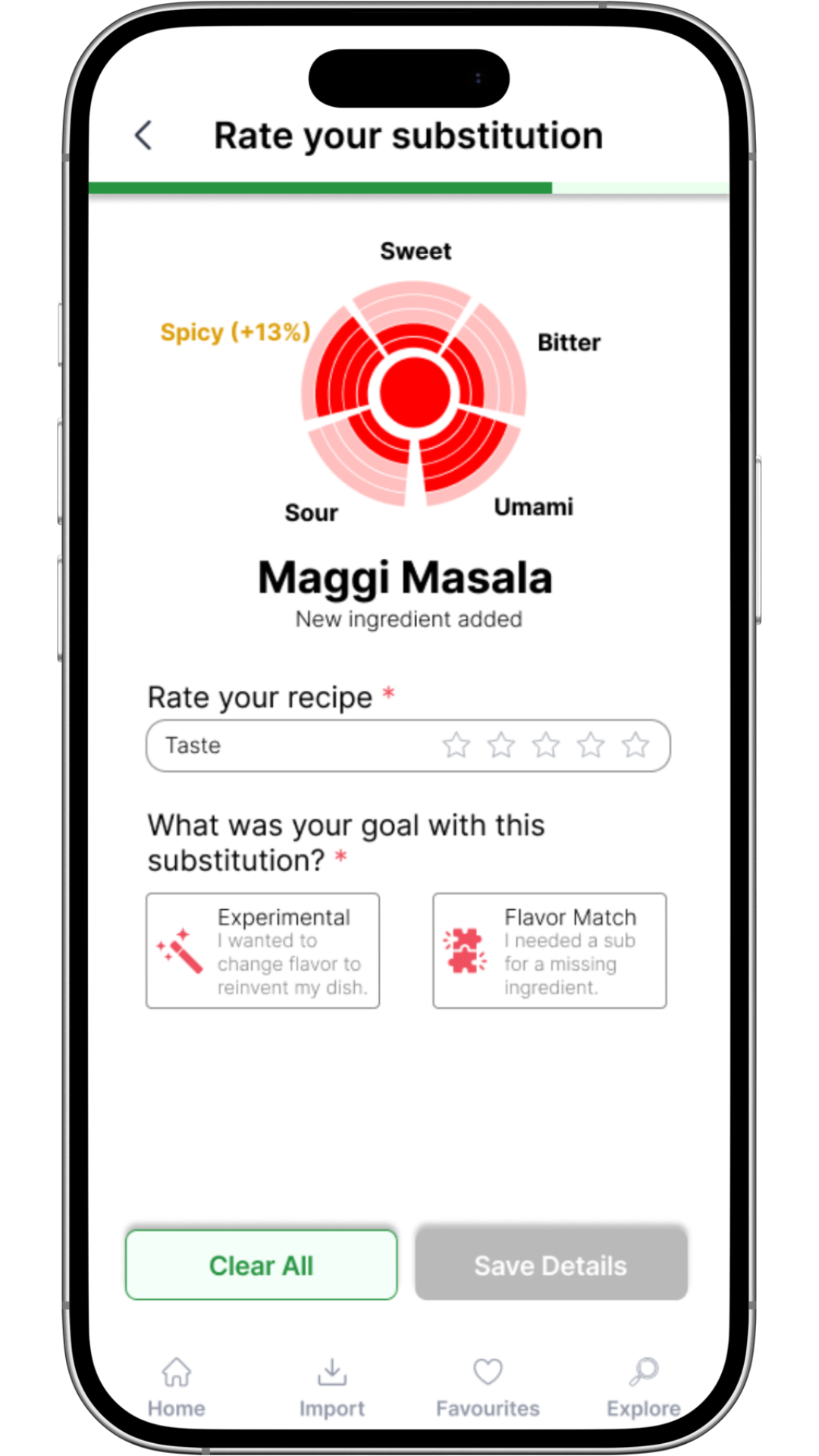
- Real-time updates to a 5-taste flavor visualization (sweet/sour/salty/umami/bitter) and similarity impact
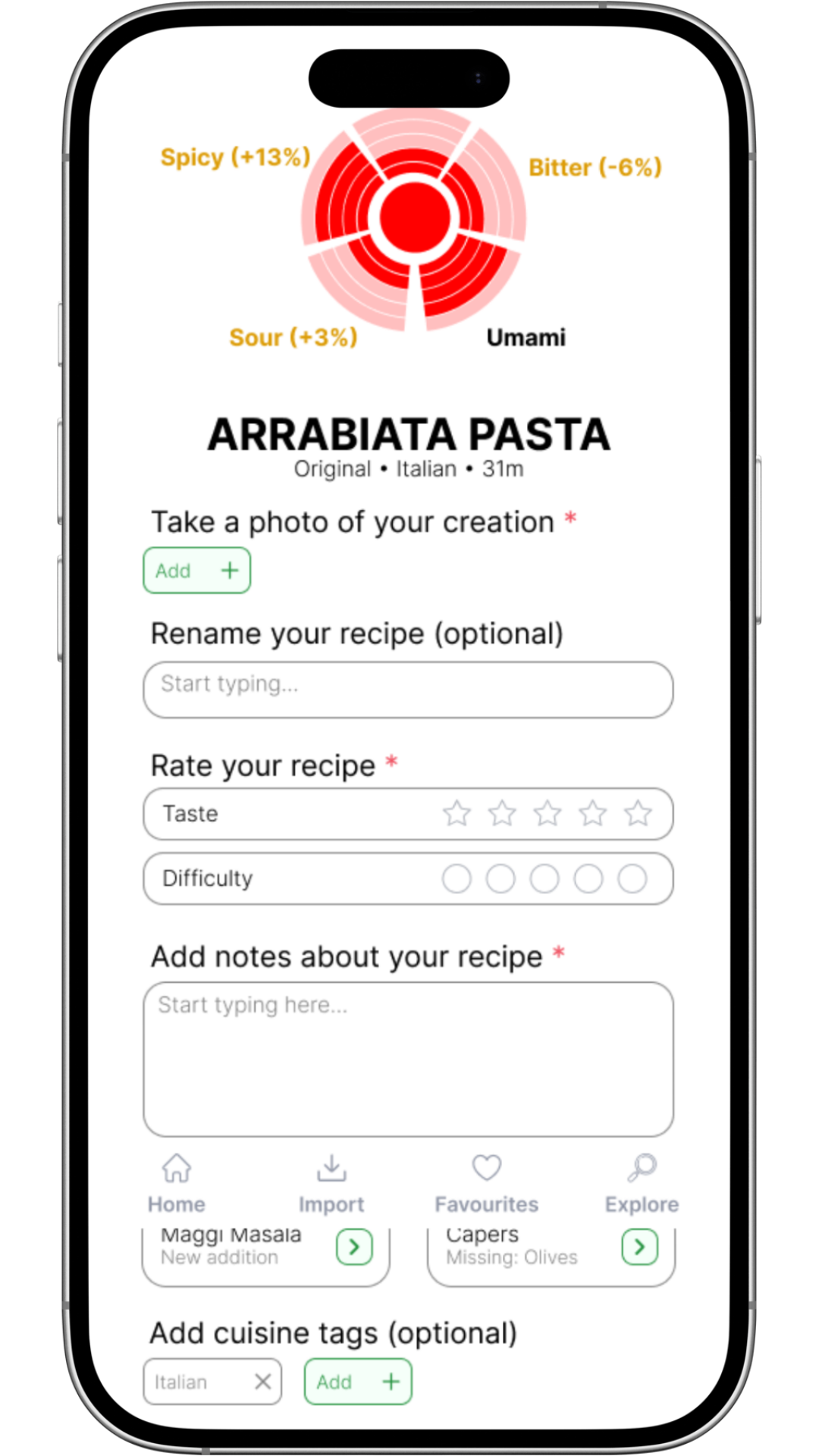
- Post-cook reflection and ratings to support learning over time
Low/Mid-fidelity prototyping (paper prototype)
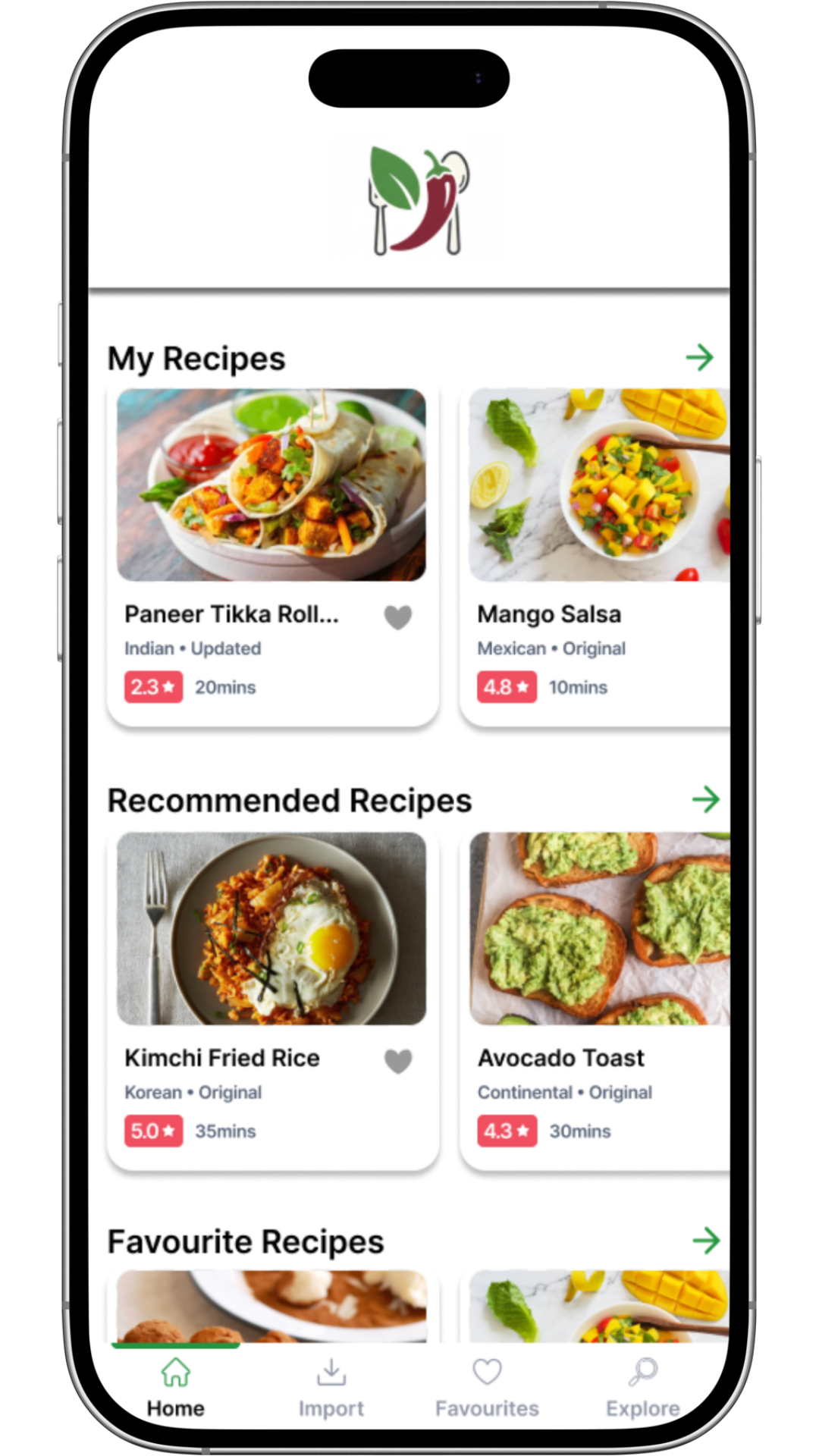
We built an interactive paper prototype supporting key tasks: import recipe, select recipe, substitute ingredients, rate/share. Prototyping choices included layered screens, movable interactive elements, and chunked information to reduce overload and keep the flow intuitive.
High-fidelity prototyping (Figma)
The Figma flow covered:
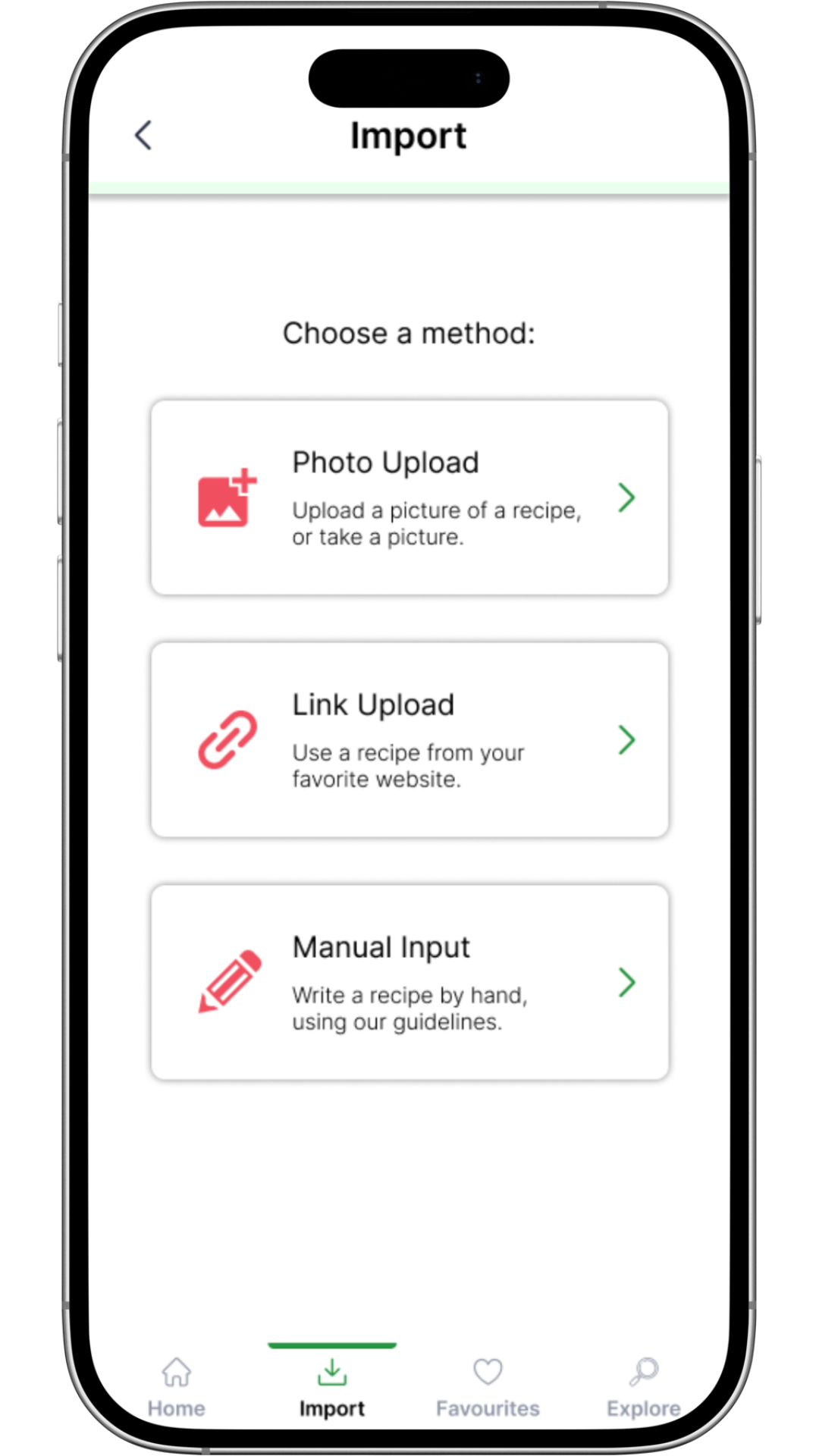
- Import flow (link/manual/photo entry points and confirmation)
- Adaptation flow: mark missing/add/remove ingredients, choose substitutions, see flavor graph update live, and proceed only when substitutions are complete
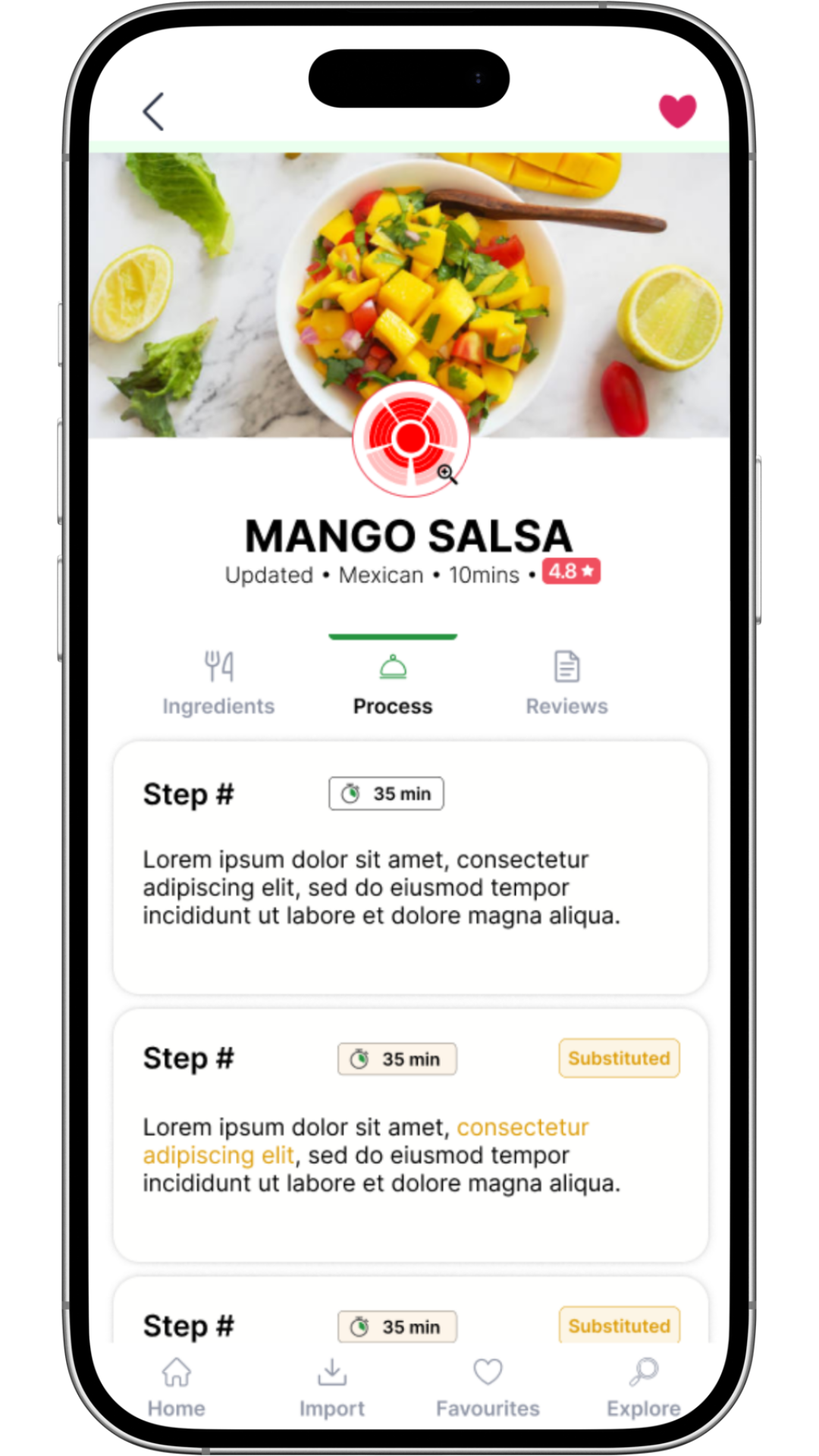
- Process: Follow the provided recipe cooking process, see visible tweaks upon substitutions, start cooking, or save for later.
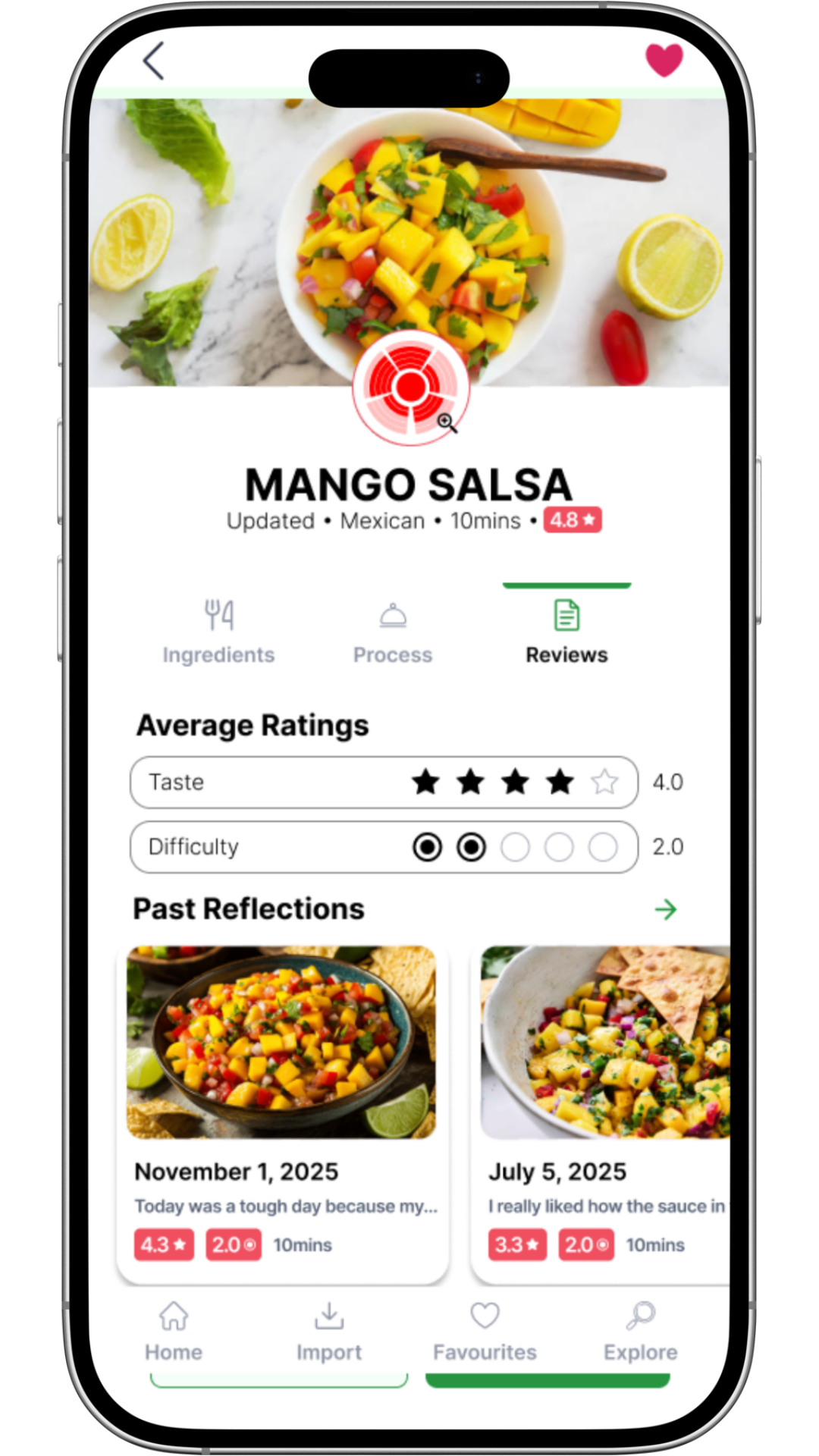
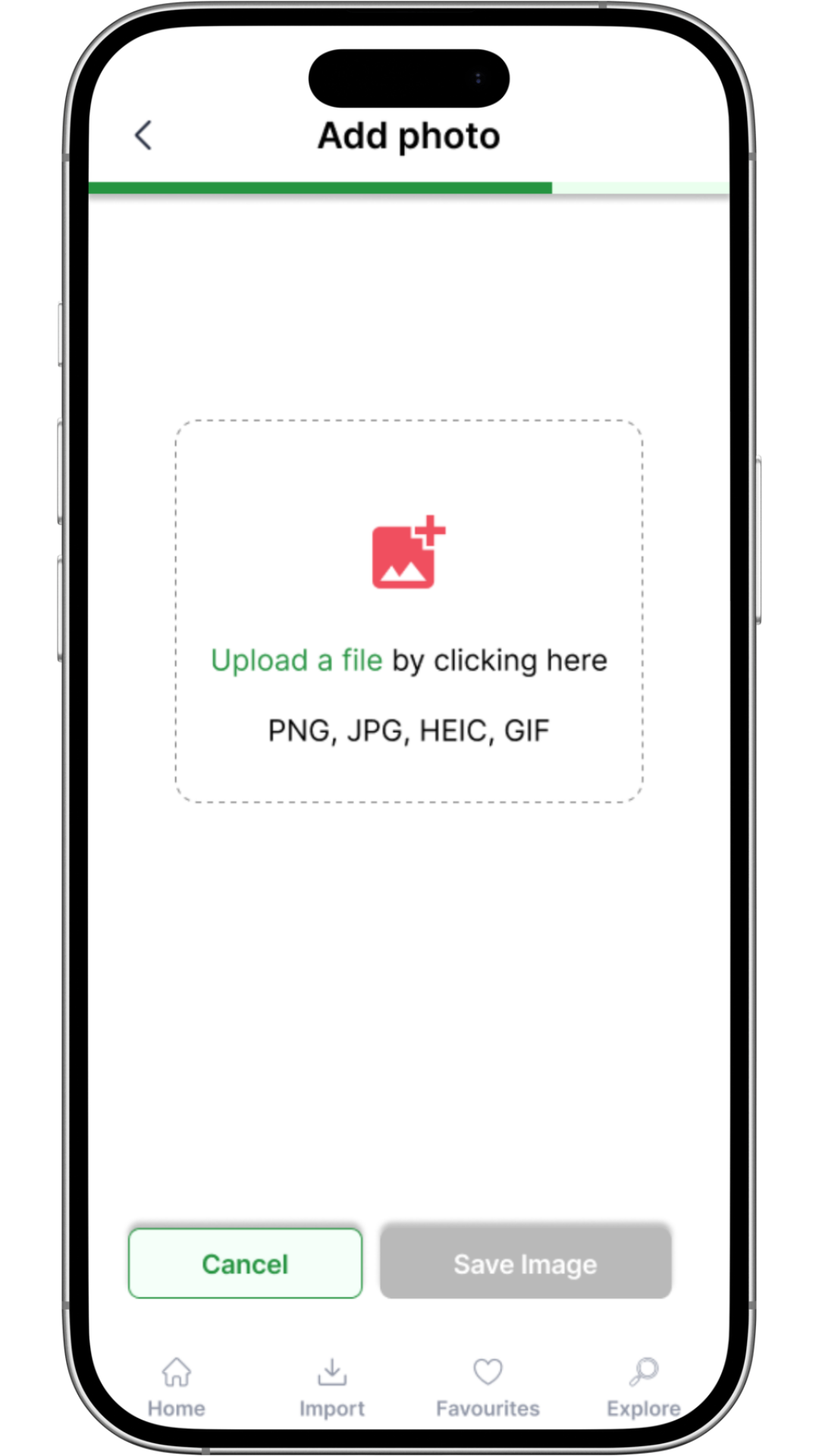
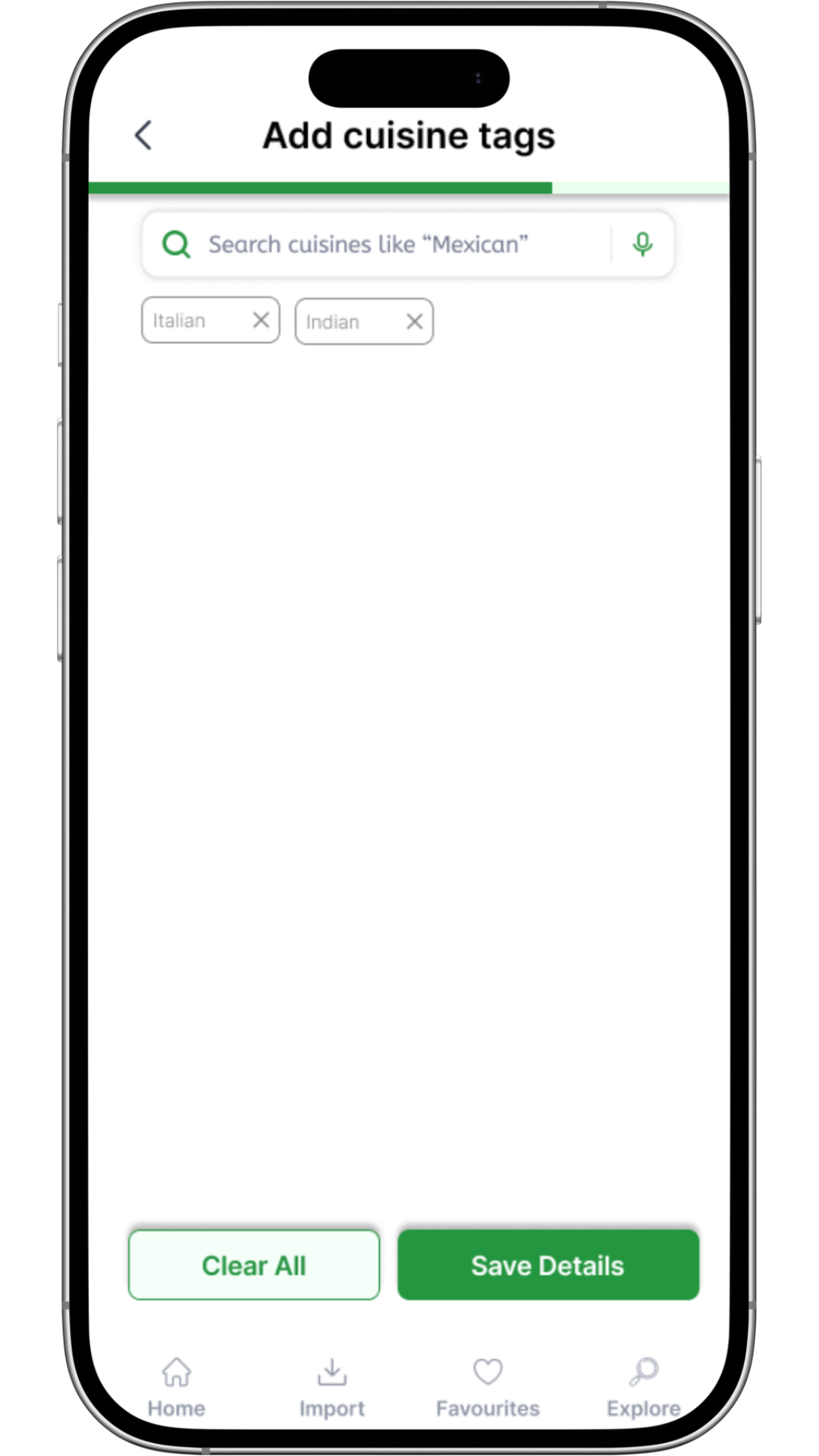
- Review/Reflect: photo upload, final flavor graph, ratings, and a clean end-of-journey experience
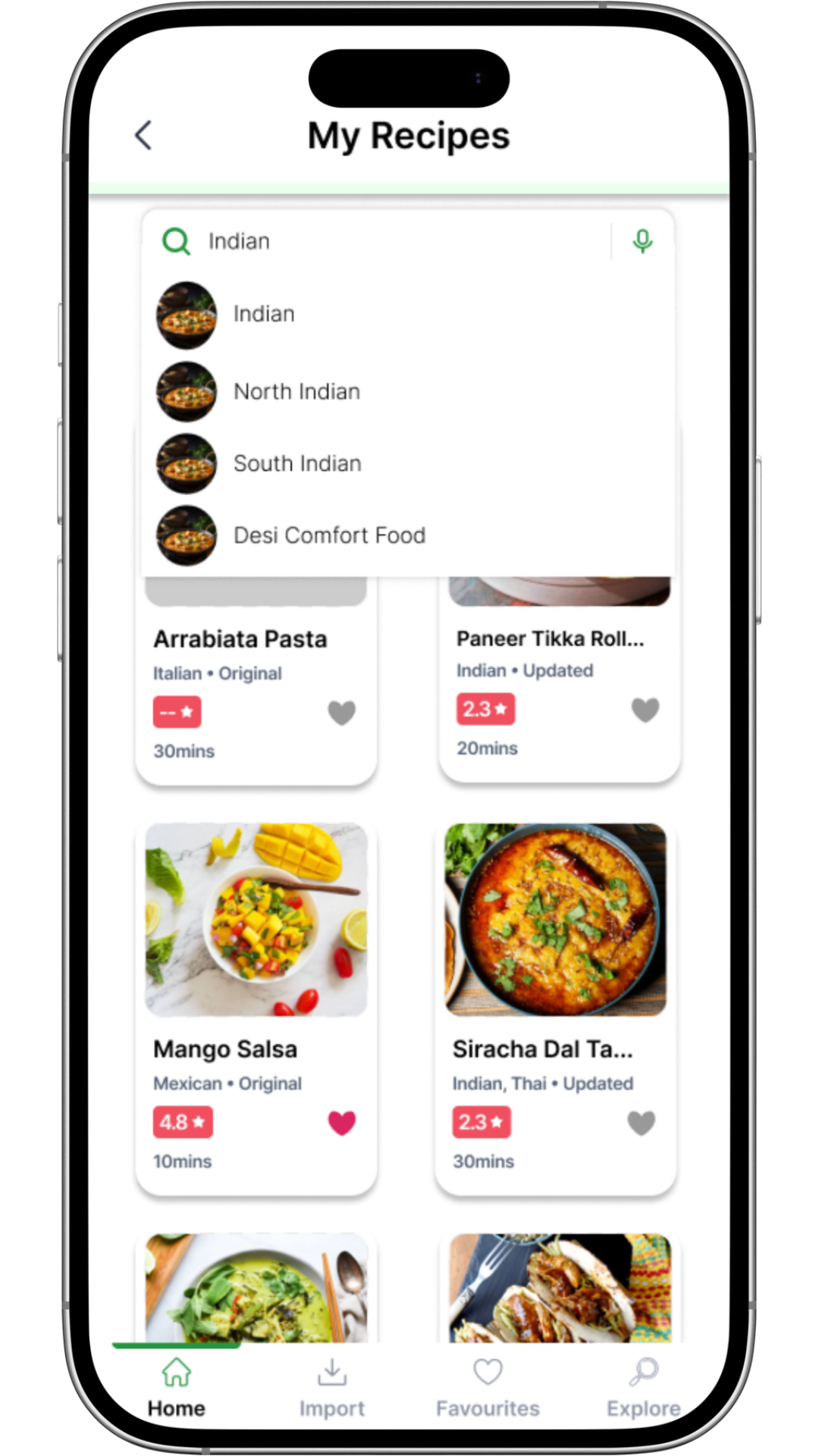
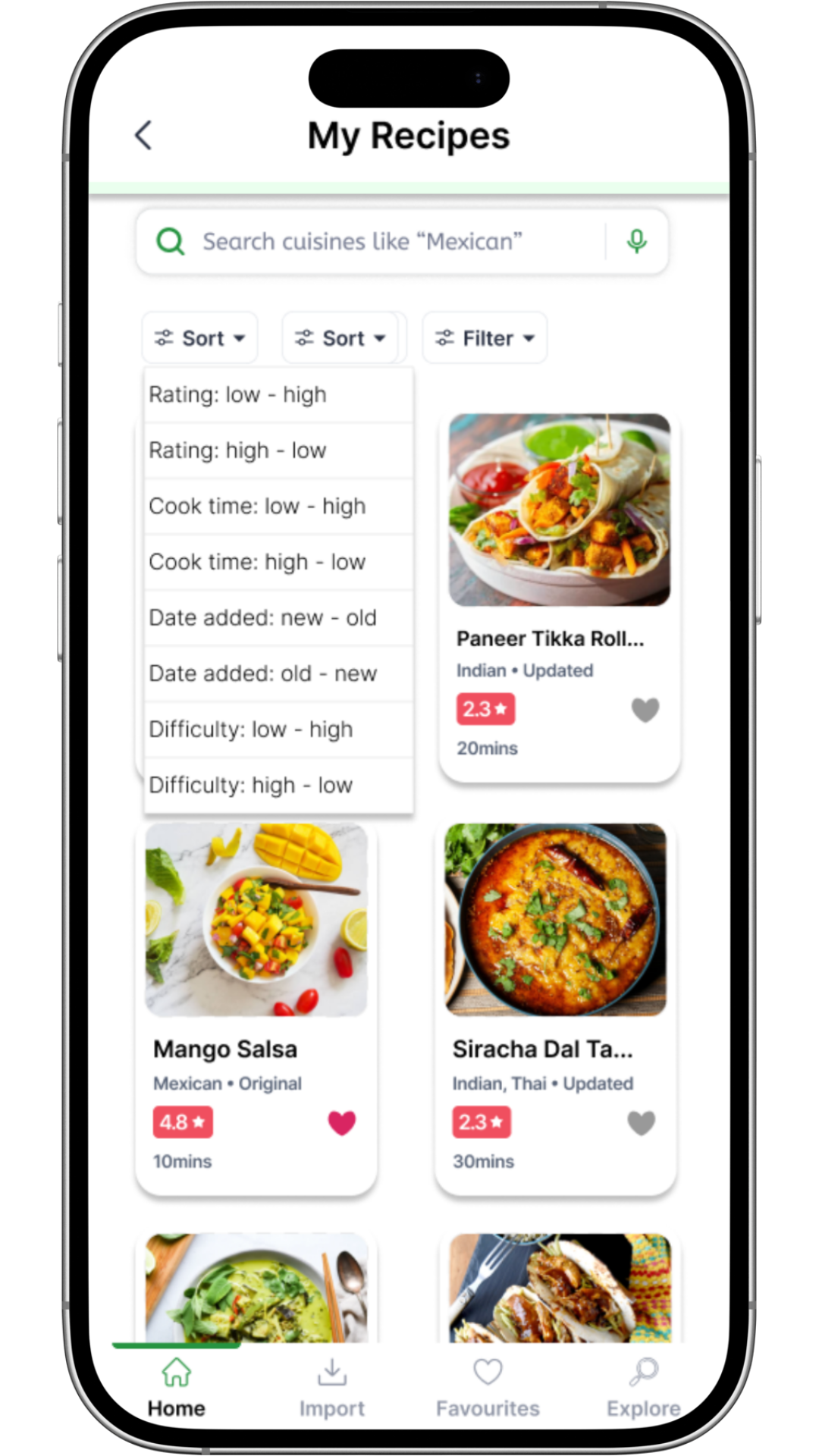
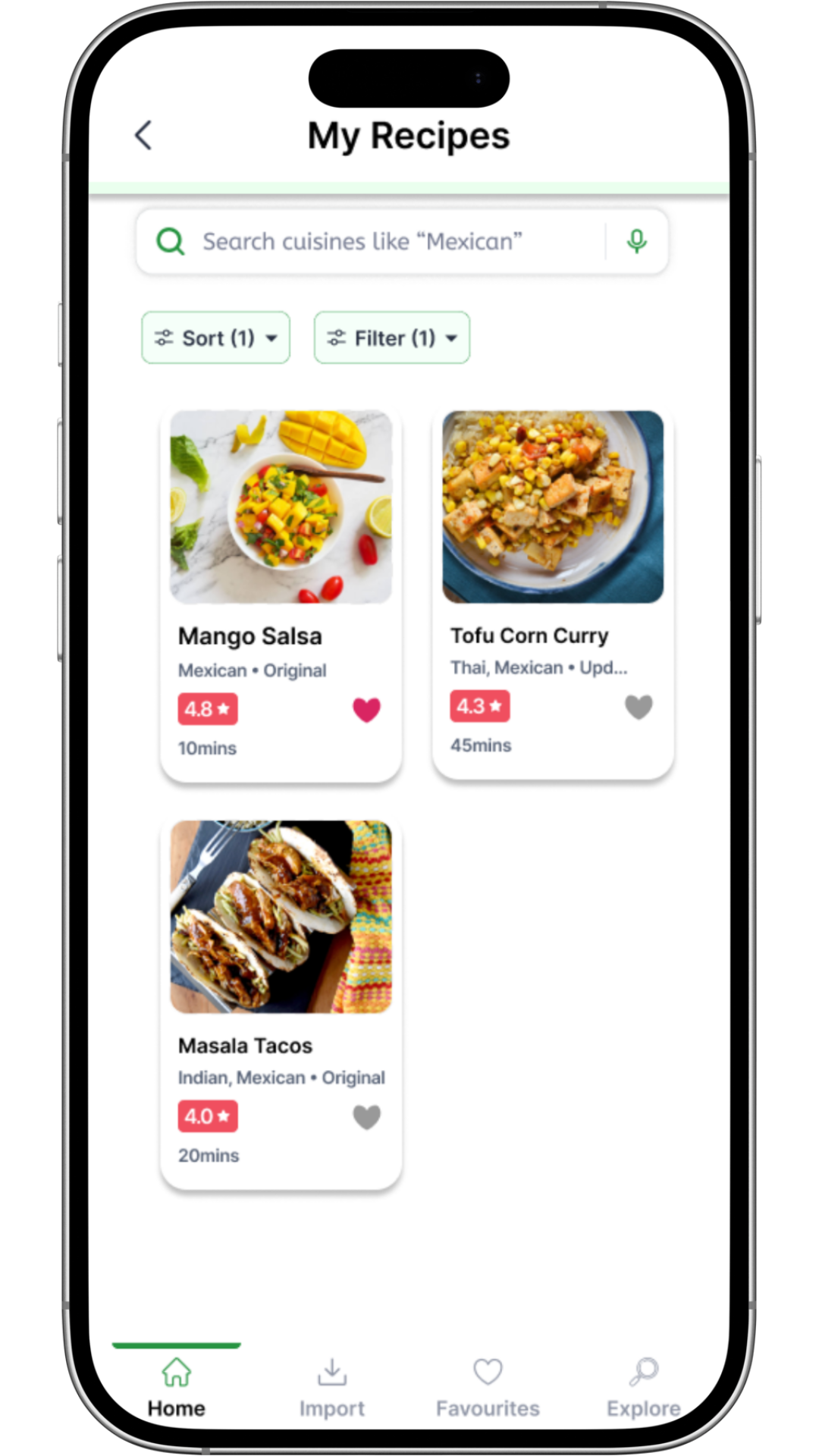
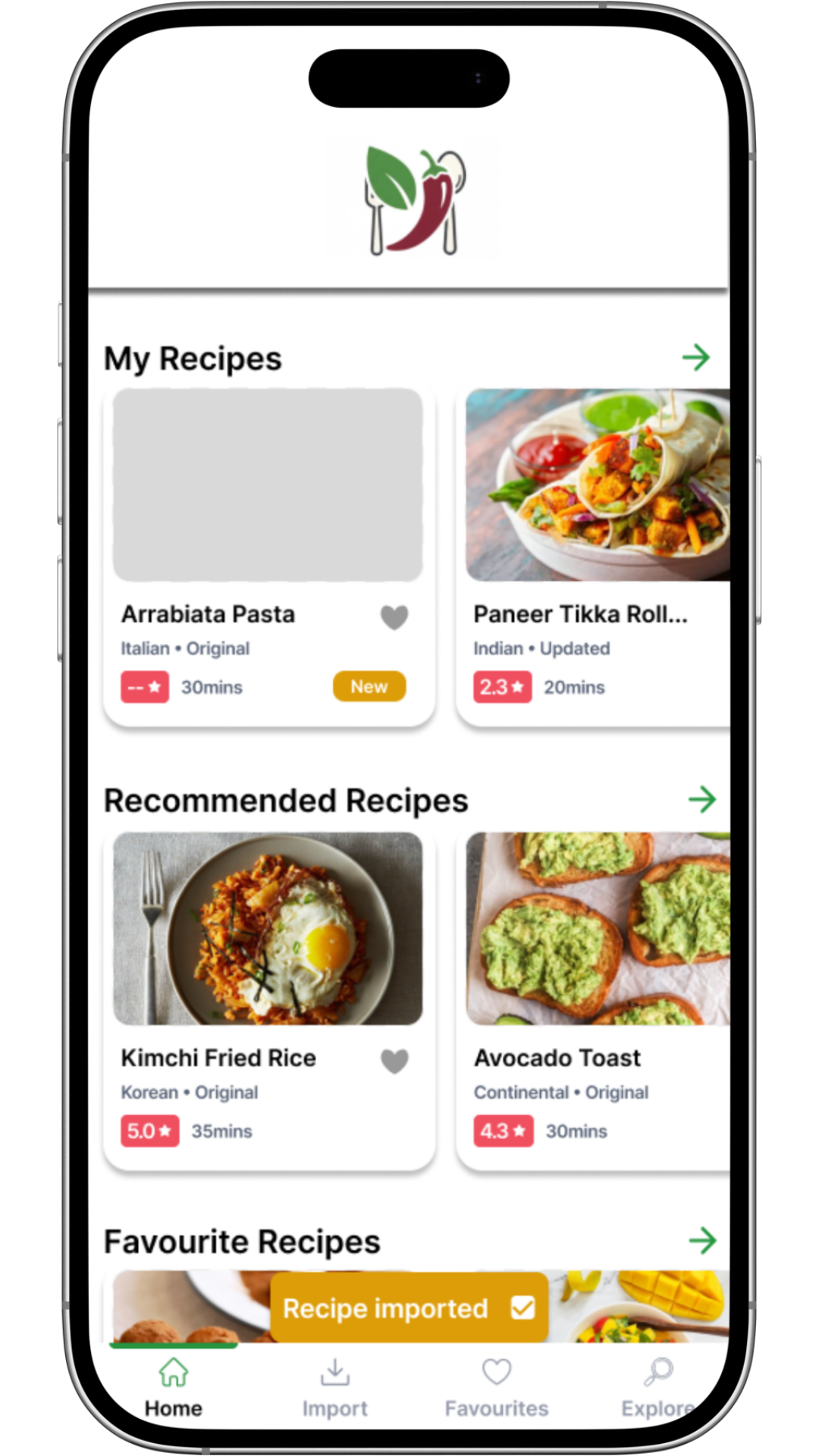
Home and Recipes


Import


Process/substitution


Rate and Review


Design decisions & prototypes
Chosen concept
Dishcovery helps immigrant cooks recreate traditional recipes using local ingredients by offering:
- Recipe import (URL/manual/photo)
- Ingredient checklist
- Substitution options (brand alternatives as well as homemade combinations)
- Real-time updates to a 5-taste flavor visualization (sweet/sour/salty/umami/bitter) and similarity impact
- Post-cook reflection and ratings to support learning over time
Low/Mid-fidelity prototyping (paper prototype)
We built an interactive paper prototype supporting key tasks: import recipe, select recipe, substitute ingredients, rate/share. Prototyping choices included layered screens, movable interactive elements, and chunked information to reduce overload and keep the flow intuitive.
High-fidelity prototyping (Figma)
The Figma flow covered:
- Import flow (link/manual/photo entry points and confirmation)
- Adaptation flow: mark missing/add/remove ingredients, choose substitutions, see flavor graph update live, and proceed only when substitutions are complete
- Process: Follow the provided recipe cooking process, see visible tweaks upon substitutions, start cooking, or save for later.
- Review/Reflect: photo upload, final flavor graph, ratings, and a clean end-of-journey experience
First screen


Second Screen


Third Screen


Fourth Screen


Evaluation
Testing method
- Round 1 (mid-fi): Moderated feedback on the interactive paper prototype using realistic tasks (import recipe, substitute ingredient, rate, and share).
- Round 2 (hi-fi): Moderated usability tests (think-aloud) on the Figma prototype with 5 participants (young immigrants/international students cooking cultural meals).
Results
Across testing, we learned:
- Users expect consistency of actions across screens (e.g., if they see “Save for Later” once, they look for it everywhere).
- Strong visual cues (button placement/clarity) helped users feel confident navigating, and the visual hierarchy generally worked well.
- The substitution workflow needed clearer instructions, especially around understanding and selecting between “brand” vs “homemade” substitutions.
Planned and implemented changes
Based on findings, we improved clarity and navigation by:
- Introducing persistent navigation bar and progress indication
- Adding clear feedback responses for radiograph visualizations
- Creating a unified flow for ingredient selection and substitution, aiding in error recovery